
Residential Paving in McKinney, TX
Expert Asphalt Paving Contractor for Residential Driveways, Parking Lots, Roads & Commercial Properties
A Practical Pavement Solution for McKinney Properties
Residential asphalt paving creates durable, smooth driving and parking surfaces for homes, acreageproperties, private lanes, shared drives, and other residential settings. The visible asphalt is only one part of a
successful pavement. Long-term performance depends on the condition of the soil, the aggregate base,drainage, pavement thickness, edge support, asphalt mixture, and compaction.
For homeowners comparing residential paving contractors in McKinney, the most useful question is not simply, "How much per square foot?" It is, "What pavement structure makes sense for this site and how will it be built?" McKinney Asphalt Paving can help property owners think through new paving, replacement, expansion, and related asphalt options without assuming that every project requires the same construction approach.
Residential Paving in McKinney, TX
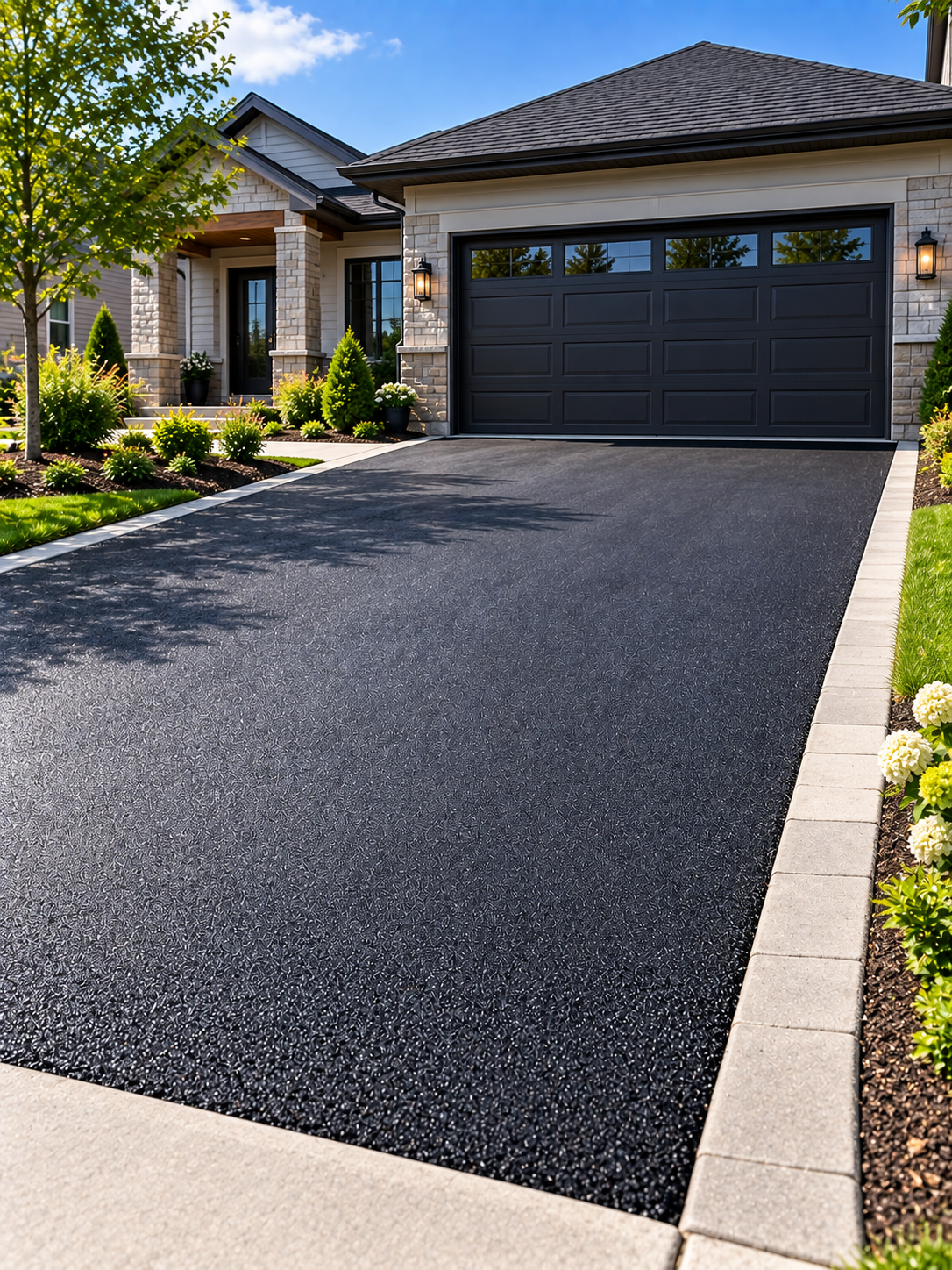
Residential Paving in a Growing North Texas Community
McKinney is a fast-growing Collin County community with established neighborhoods, new residential construction, retail centers, offices, schools, service businesses, and industrial or flex properties.
That mix creates very different pavement demands: a private driveway may see a few vehicle movements each day, while a commercial entrance, delivery lane, or parking lot can experience repeated turning, braking, and heavier loads. North Texas weather also matters. Long periods of heat can raise pavement temperatures, while thunderstorms can expose drainage weaknesses and allow water to reach cracks or poorly supported base material. Good asphalt work therefore starts below the visible surface, with attention to drainage, base support, lift thickness, compaction, edges, transitions, and the intended traffic.
New and established homes can present different paving challenges. A new site may require substantial grading and base construction. An older property may have an existing gravel drive, deteriorated asphalt, utility cuts, tree-root concerns, drainage changes, or tight access. The paving plan should respond to the actual site.
Where Residential Asphalt Is Commonly Used
Asphalt is commonly used for driveways, circular drives, private access roads, detached garage approaches, RV or trailer parking areas, sport or recreation areas designed for pavement, and shared residential lanes. It can also be used to widen an existing paved area when the new section can be properly supported and tied into surrounding grades.
The intended use matters. Passenger cars create different loads than delivery trucks, motorhomes, large trailers, moving vans, or frequent service vehicles. A contractor should know how the pavement will be used before recommending excavation depth, base work, or asphalt thickness
Benefits of Asphalt for Residential Properties
Asphalt offers a smooth, continuous surface and can often be constructed efficiently compared with pavementm systems that require extensive formwork. Its dark surface creates a clean visual frame for many home styles,
and properly designed asphalt can be maintained through crack treatment, localized repairs, sealcoating when appropriate, and eventual resurfacing.
Another advantage is repairability. Utility work or localized damage can often be patched without replacing an entire driveway. Later in the pavement's life, an overlay may be possible if the base remains stable and grades allow additional thickness.
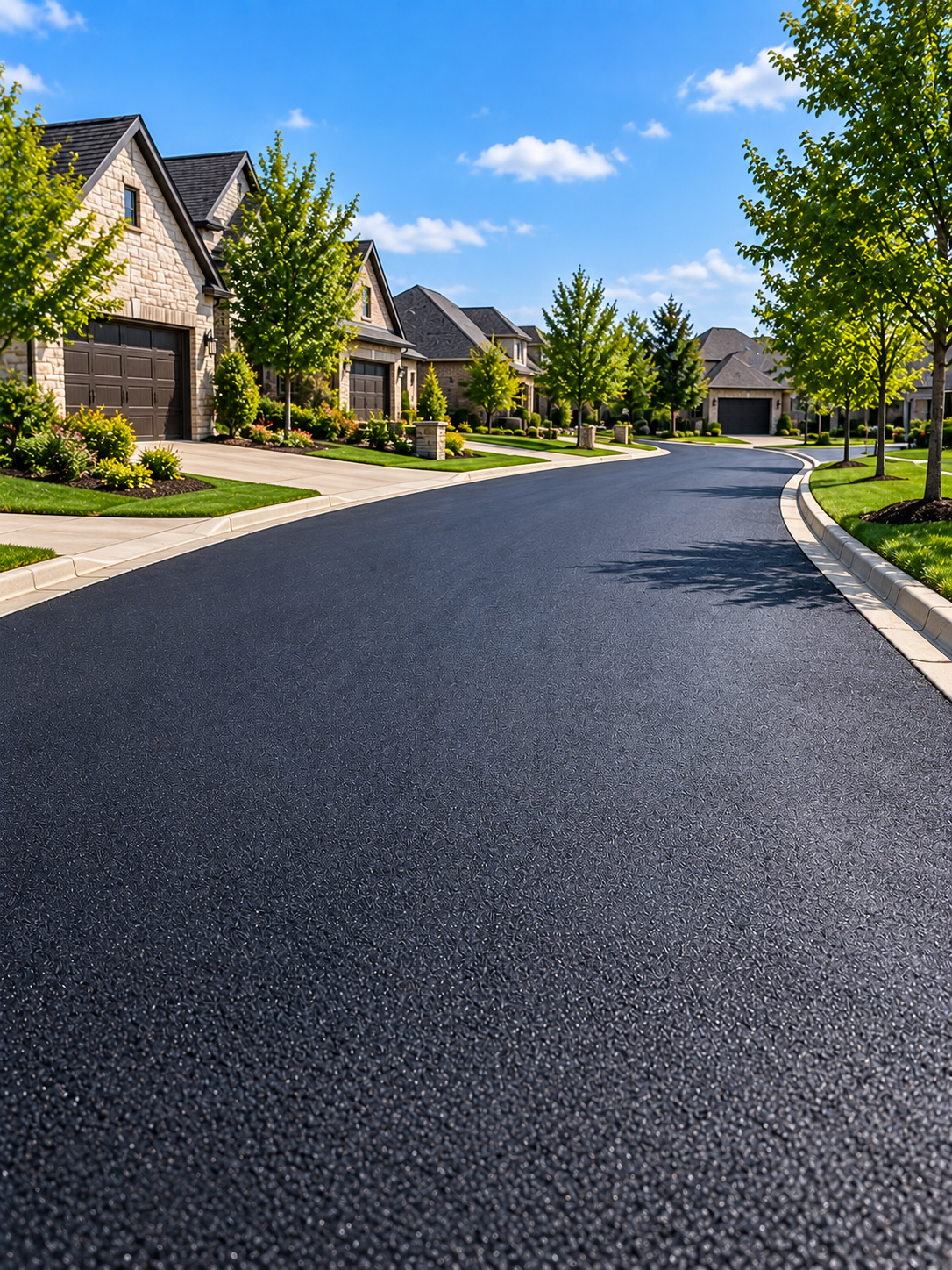
New Construction, Replacement, and Extensions
A new driveway typically requires excavation or grading, preparation of the subgrade, placement and compaction of aggregate base where needed, and asphalt placement. Replacement projects add another decision: whether the existing pavement and base should be removed, partially removed, milled, repaired, or used in some way as part of the new work.
Extensions and widening require careful edge construction. Simply placing asphalt over lawn or uncompacted fill is a common shortcut that can lead to edge settlement and cracking. The added area should receive suitable support and be graded so water does not become trapped against the old pavement or nearby structures.
Base Preparation and Drainage
The base carries traffic loads and provides a stable platform for the asphalt. Soft subgrade, organic material, poorly compacted fill, or saturated soil can undermine a good asphalt mixture. Residential paving may therefore involve undercutting weak material, adding aggregate, compacting in lifts, and shaping the base before asphalt arrives.
Drainage should be planned at the same time. The pavement needs positive drainage toward an appropriate outlet. Low spots that hold water can accelerate deterioration and create nuisance ponding. Grades near garages, foundations, sidewalks, gates, and public streets require particular attention.
Asphalt Placement and Compaction
Hot-mix asphalt must be placed and compacted while it remains within a workable temperature range. TxDOT guidance emphasizes that mat temperature directly affects compaction because asphalt binder becomes more
viscous as the mix cools. Roller timing, lift thickness, ambient conditions, and support underneath the mat all influence density.
On a residential project, compaction also includes attention to edges, transitions, garage approaches, and areas where large rollers have limited access. Appropriate smaller compaction equipment may be needed in
confined locations.
A Typical Residential Paving Process
A typical process starts with a site visit, measurements, use requirements, and discussion of drainage or access. Existing surfaces are evaluated. The scope may include removal, excavation, grading, base construction, compaction, and edge preparation.
Once the foundation is ready, asphalt is delivered, placed, shaped, and compacted. Joints and transitions receive attention, and the finished surface is checked for general drainage and smoothness. The owner then receives guidance about keeping traffic off the new pavement during its initial cooling and stabilization period and about sensible long-term maintenance.
Planning the Driveway Around Everyday Use
Before paving, think through how the property actually functions. Where do residents back out? Where do guests park? Will a trailer need a wider turning radius? Does a delivery truck routinely use the drive? Is there a gate, detached garage, basketball goal, or side-yard parking area? These details can influence width, curves, turnaround geometry, and edge exposure.
A driveway that is technically paved but awkward to use is not a successful design. Small layout changes made before excavation are much easier than trying to add pavement after the project is complete.
Why Professional Residential
Paving Matters
Paving equipment does not correct a weak foundation. Problems caused by poor drainage, inadequate base, insufficient compaction, thin unsupported edges, or bad transitions can show up after the surface initially looks complete. Professional work is valuable because the contractor evaluates the whole pavement section rather than treating asphalt as a decorative top layer.
Homeowners should also consider site protection. Heavy equipment, dump trucks, and paving machinery need access. A good project plan considers landscaping, irrigation, concrete, garage floors, gates, utilities, and
neighboring property.
Service Area
Residential paving inquiries are centered on McKinney and may also include nearby communities such as Allen, Fairview, Melissa, Princeton, Prosper, and Frisco, subject to project size and scheduling.
Why Choose McKinney Asphalt Paving
McKinney Asphalt Paving gives McKinney-area homeowners a local point of contact for asphalt paving decisions ranging from a straightforward driveway to larger private access and parking areas. The goal is to match the work to the property's use, existing conditions, and long-term maintenance needs.
Contact McKinney Asphalt Paving to discuss a new residential paving project, replacement, expansion, or an evaluation of existing asphalt. A site-specific estimate can identify the work that should happen below the surface as well as the asphalt that will be visible when the project is complete.
What a Detailed Residential Estimate Should Explain
A useful proposal should describe the approximate paving area and the major construction steps. If existing pavement will be removed, that should be stated. If aggregate base is being added, the scope should explain where. If asphalt is being placed in one or more lifts, that should be clear. Transitions, drainage assumptions, and restoration limits should also be understandable.
Homeowners do not need to become pavement engineers, but they should be able to tell why one proposal differs from another. Comparing only total price can hide major differences in excavation, base, thickness, and
preparation.
Questions to Resolve Before Construction
A useful preconstruction conversation should resolve several practical issues. Where will equipment enter and turn around? Is there enough room for trucks to unload without damaging landscaping or blocking a street
longer than necessary? Are there known irrigation lines, invisible dog fences, shallow utilities, culverts, or drainage pipes near the work? Will the driveway connect to public pavement, a private road, or a concrete
apron?
Owners should also identify future plans. If a detached garage, addition, gate, or expanded parking pad is likely, it can be helpful to think about those changes before grades and edges are finalized. Planning ahead
does not mean overbuilding the current project; it means avoiding obvious conflicts that would require cutting or rebuilding new pavement soon afterward.
Understanding Price Differences Between Paving Proposals
Residential paving prices can vary because the scopes are not always equivalent. One contractor may include removal and disposal of old asphalt, substantial base correction, and a defined compacted asphalt section. Another may assume the existing base is acceptable and price only a surface layer. Both proposals can be described casually as "paving the driveway," even though the construction is different.
Access also affects cost. Long haul distances across the property, narrow gates, steep grades, handwork around structures, or small isolated areas can reduce production. The best comparison is line by line: preparation, materials, thickness, equipment access, transitions, cleanup, and exclusions. A clear scope gives the homeowner a better basis for choosing than a single price per square foot.
Frequently Asked Questions About Residential Paving in McKinney
How thick should a residential asphalt driveway be?
There is no single correct thickness for every driveway. Soil, base support, vehicle loads, drainage, asphalt mixture, and construction method all affect the pavement design. The contractor should recommend a section for the actual site.
Can asphalt be installed over an old driveway?
Sometimes an overlay is appropriate, but only when the existing pavement is sufficiently stable and grades can
accept added thickness. Severe cracking, base failure, drainage problems, or elevation constraints may
require removal or more extensive repair.
Do I need an aggregate base under asphalt?
Many projects need a properly graded and compacted aggregate base, especially on new construction or
where existing support is inadequate. Site conditions determine the required preparation.
How soon can I drive on new asphalt?
The surface needs time to cool and stabilize. Weather, mix, thickness, and vehicle weight matter, so follow
project-specific instructions from the paving contractor
Can you widen an existing driveway?
Yes, when the added area can be excavated, based, graded, and tied into the existing pavement properly. The
new edge should not be paved directly over uncompacted soil.
Is asphalt suitable for long private drives?
Yes. Asphalt is commonly used for long residential access drives, but drainage, base construction, turning
areas, and expected vehicle loads become especially important.
What maintenance will a new asphalt driveway need
Keep drainage paths clear, watch for developing cracks or settlement, avoid concentrated loads at vulnerable
edges, repair damage when it appears, and consider sealcoating later when the surface has aged enough to
benefit.
Request a Residential Paving Estimate in McKinney, TX
If you are planning a residential paving project or need help deciding which asphalt treatment fits your property,
contact McKinney Asphalt Paving to discuss the site and request an estimate. A condition-based
recommendation can help you compare maintenance, repair, resurfacing, or paving options with a clearer
understanding of what the project should accomplish.