
Parking Lot Paving in McKinney, TX
Expert Asphalt Paving Contractor for Residential Driveways, Parking Lots, Roads & Commercial Properties
A Practical Pavement Solution for McKinney Properties
A parking lot is both pavement and infrastructure. It organizes vehicle movement, provides access to a property, supports deliveries and emergency response, manages stormwater, and creates one of the first
physical impressions customers or tenants receive. Paving it correctly requires coordination of traffic, drainage, base support, asphalt, curbs, concrete, utility structures, and markings.
McKinney Asphalt Paving works with McKinney-area property owners and managers considering new parking lot paving, replacement, expansions, or resurfacing. The appropriate scope should be based on pavement condition and site function rather than a one-size-fits-all asphalt thickness.
Parking Lot Paving in McKinney, TX
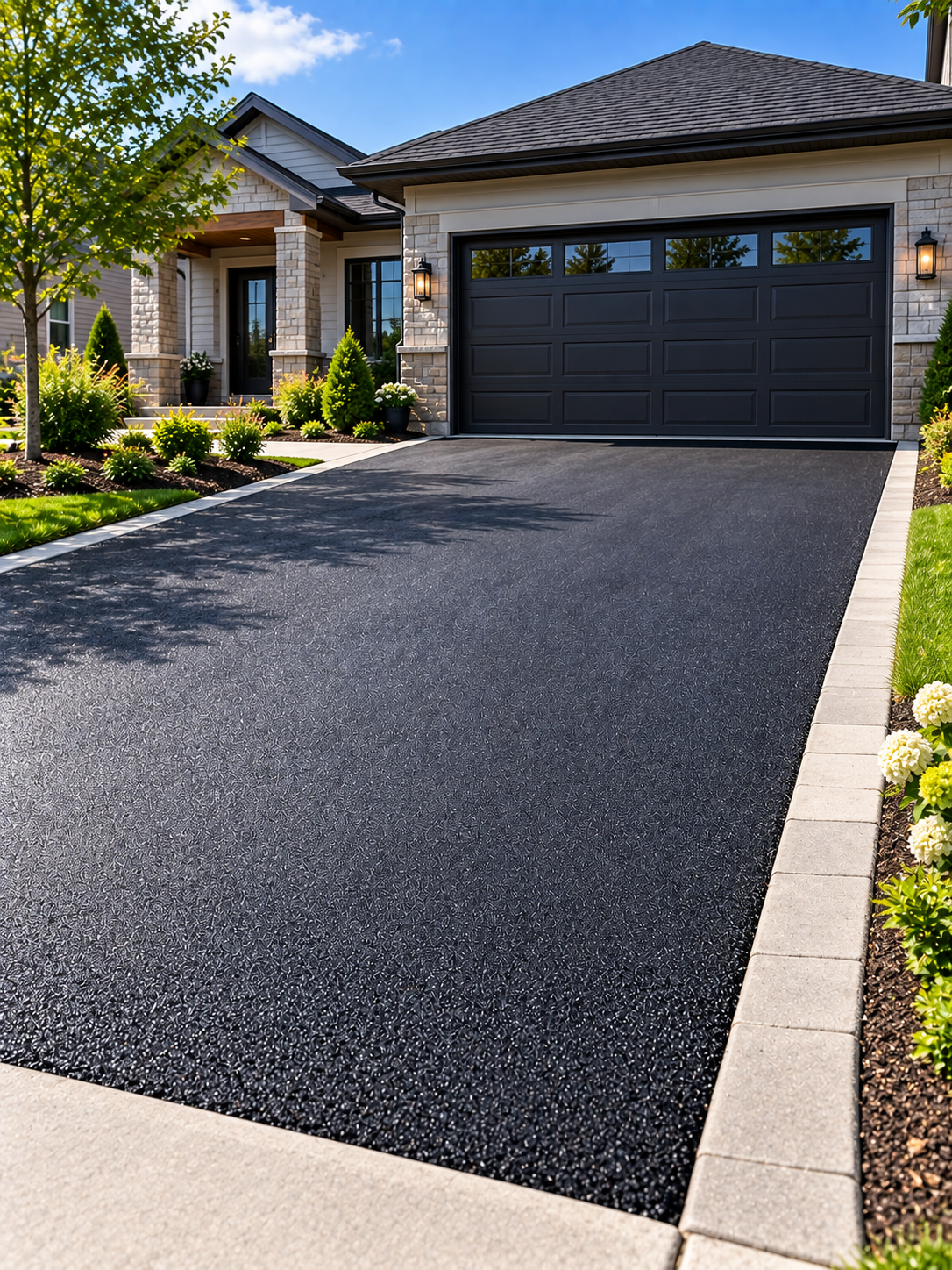
Parking Lots in a Growing McKinney Market
McKinney is a fast-growing Collin County community with established neighborhoods, new residential construction, retail centers, offices, schools, service businesses, and industrial or flex properties.
That mix creates very different pavement demands: a private driveway may see a few vehicle movements each day, while a commercial entrance, delivery lane, or parking lot can experience repeated turning, braking, and heavier loads. North Texas weather also matters. Long periods of heat can raise pavement temperatures, while thunderstorms can expose drainage weaknesses and allow water to reach cracks or poorly supported base material. Good asphalt work therefore starts below the visible surface, with attention to drainage, base support, lift thickness, compaction, edges, transitions, and the intended traffic. The city's mix of new development and established commercial properties creates demand for both new parking construction and rehabilitation. Retail, medical, office, multifamily, school, church, industrial, and mixed-use sites can have very different peak traffic and heavy-vehicle patterns.
New Parking Lot Construction
New parking lot construction starts with civil grades and a prepared foundation. Subgrade is shaped and compacted, aggregate base or other structural layers are installed as required, drainage structures are
coordinated, and asphalt is placed in designed lifts.
The pavement plan should distinguish ordinary parking stalls from entrances, circulation aisles, fire routes, loading approaches, and areas used by refuse trucks or delivery vehicles. These zones can experience higher loads and turning stresses.
Parking Lot Replacement and Reconstruction
Older lots may need reconstruction when deterioration is widespread through the pavement structure. Symptoms can include extensive alligator cracking, repeated potholes, deep rutting, unstable patches, pumping or movement, and recurring settlement.
Reconstruction can involve full-depth removal, base repair, subgrade correction, drainage improvements, and new asphalt. Localized full-depth repairs may also be combined with resurfacing when only portions of the lot
have structural failure.
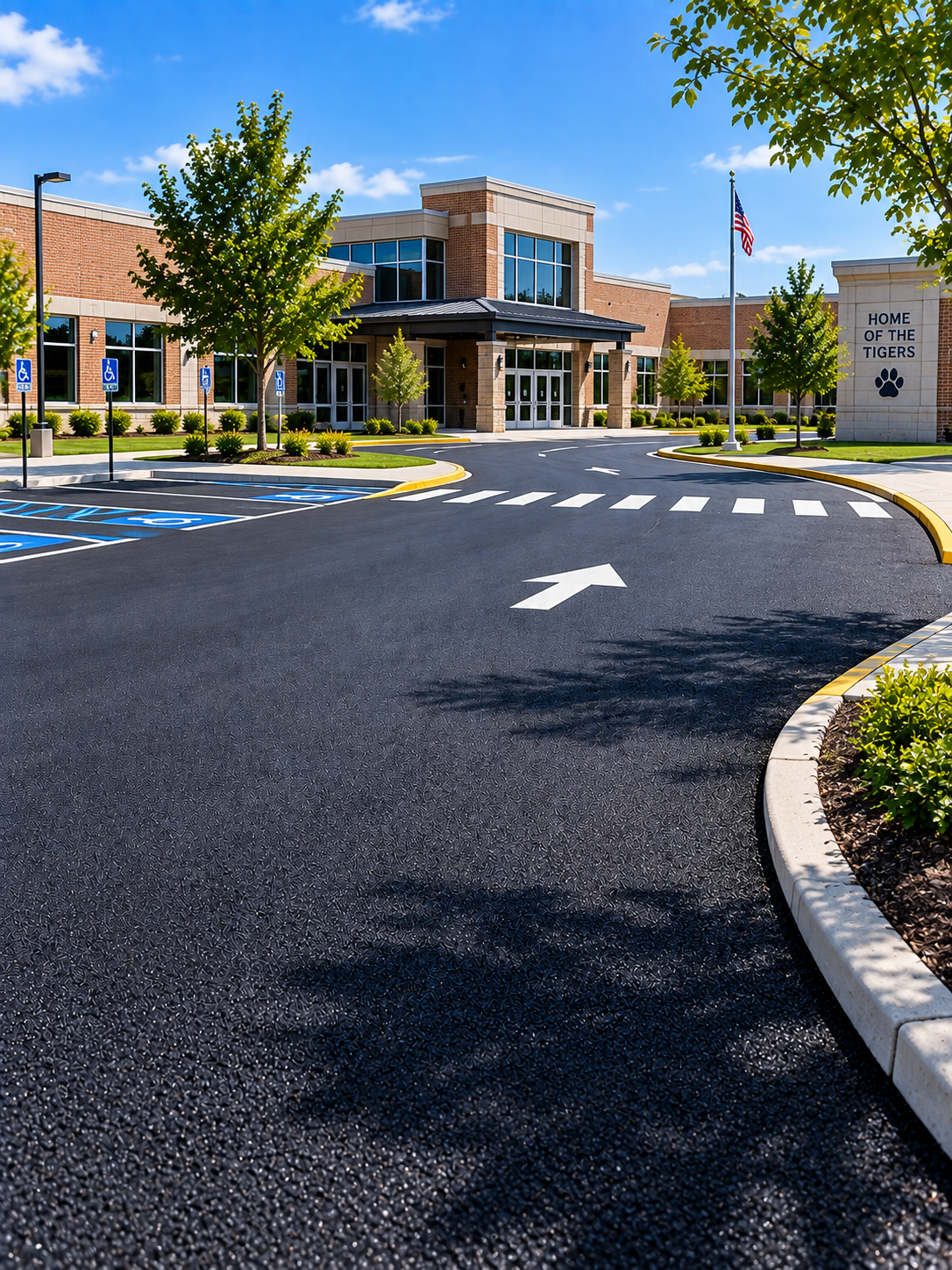
Resurfacing Existing Parking Lots
A stable lot with surface deterioration may be a candidate for milling and overlay. Pre-overlay repairs are important because the new surface will inherit problems that remain underneath. Failed areas are patched, low spots may be leveled, and milling can preserve elevations at curbs, gutters, drains, and entrances.
A tack coat promotes bond between the old and new asphalt. After paving and cooling, the lot can be restriped
according to the approved layout.
Drainage, Curbs, and Utility Structures
Parking lots contain many fixed points: curb lines, catch basins, manholes, valve boxes, sidewalks, ramps, building entrances, loading docks, and concrete aprons. Finished asphalt elevations must work with these features.
Ponding is more than an appearance issue. Standing water can inconvenience customers, obscure pavement markings, and indicate a profile or drainage problem. Paving work should preserve or improve positive drainage rather than simply covering low areas with a uniform lift.
Traffic Flow and Heavy-Use Zones
Entrances and intersections see braking, acceleration, and turning. Dumpster areas receive heavy, slow-moving trucks that can create concentrated stress. Drive-through lanes and loading routes can accumulate repeated wheel paths. A parking lot plan should identify these zones before construction.
In some designs, heavy-load areas may use a different pavement section or concrete for particular pads while asphalt serves the larger parking field. The right choice depends on traffic and project requirements.
Accessibility and Pavement Markings
Parking lots must coordinate with accessible parking and routes, fire lanes, loading zones, directional arrows, stop bars, and other markings. Paving contractors should work from current plans or owner-provided requirements when available.
Surface slopes are particularly important around accessible spaces and routes. Paving should not casually alter compliant grades. Projects involving major changes may require design or review by qualified professionals and applicable authorities.
A Typical Parking Lot Paving Process
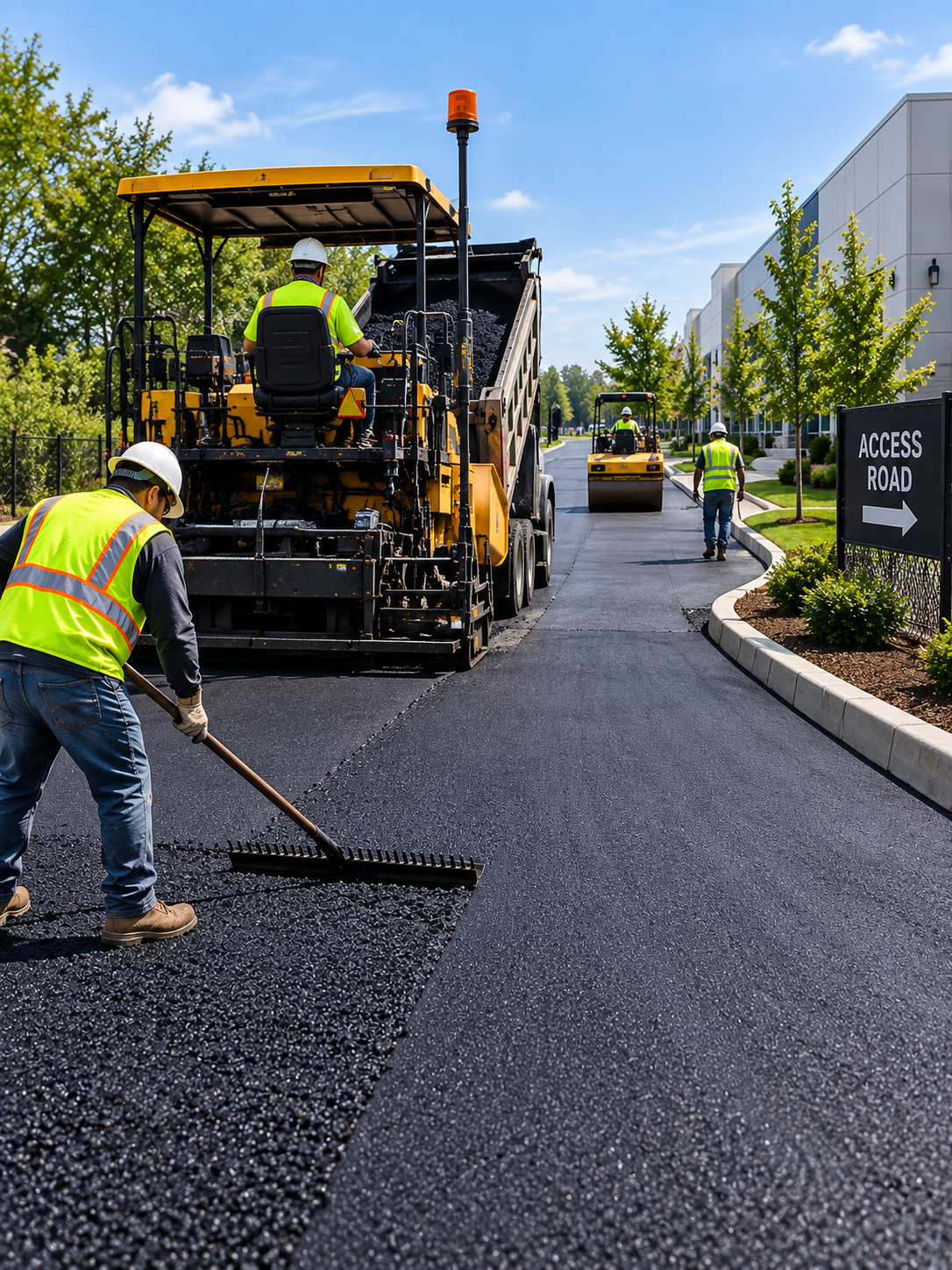
The process may include survey or layout review, demolition or milling, excavation, base work, drainage adjustments, proofing and compaction, asphalt placement, rolling, structure adjustments, cleanup, and striping.Large sites are often phased.
Temperature control is critical during asphalt placement. TxDOT notes that as hot-mix asphalt cools, binder viscosity rises and the material becomes increasingly resistant to compaction. Roller operations therefore need
to follow the paver closely enough to achieve density before the effective compaction window closes.
Choosing a Parking Lot Paving Contractor in McKinney
Ask for a scope that separates milling, full-depth repairs, base work, asphalt lifts, structure adjustments, traffic control, and striping. Review how heavy-load areas and drainage will be handled. If the lot is being resurfaced,
ask what existing failures will be repaired first.
For active commercial properties, schedule and phasing should be part of the bid discussion, not an afterthought. A technically sound project should also be operationally workable.
Service Area
Parking lot paving is centered on McKinney and may include commercial properties in nearby Allen, Fairview, Melissa, Princeton, Prosper, Frisco, and surrounding areas based on project requirements.
Why Choose McKinney Asphalt Paving
McKinney Asphalt Paving offers McKinney property owners a local resource for parking lot paving decisions, from new construction and replacement to resurfacing and maintenance planning. The focus is on matching the asphalt solution to the condition and use of the property.
Contact McKinney Asphalt Paving to request an estimate for a parking lot project and discuss traffic, drainage, repairs, phasing, and final surface needs before work begins.
Phasing a Parking Lot Project
A phased plan can preserve business access, but each phase creates interfaces that must be managed. The contractor and property manager should identify entrances, employee areas, customer parking, deliveries,
emergency routes, and tenant-specific needs.
Advance communication helps prevent vehicles from entering closed areas. On sealcoating or striping phases, curing time also matters; on paving phases, the asphalt must cool and the site must be safe before reopening.1
Planning Around Customers, Tenants, and Deliveries
A parking lot project affects more people than the paving crew. Property managers should identify peak customer periods, tenant opening hours, school or church schedules, trash pickup, delivery windows, employee shifts, and emergency access before construction dates are finalized.
For phased work, temporary circulation should be intuitive. Drivers should not have to cross fresh asphalt or make unsafe movements because the normal aisle is closed. The paving sequence and communication plan
should work together.
Building a Long-Term Parking Lot Maintenance Plan
New paving is the beginning of the maintenance cycle, not the end. Property managers should periodically inspect drainage, cracks, isolated settlement, utility cuts, high-load areas, and pavement markings. Early
repairs can prevent small failures from spreading.
As the surface ages, crack treatment and sealcoating may become appropriate in sound areas. Later, milling and resurfacing may extend service when the base remains stable. Keeping records of repairs and problem areas can make future capital planning more accurate.
Preconstruction Information for Property Managers
Property managers can improve a paving project by gathering current site plans, known utility information, tenant contacts, delivery schedules, fire-access requirements, and any prior pavement reports. Identify areas that have a history of ponding, repeated potholes, underground repairs, or heavy truck use. Those locations deserve special attention during the site walk.
If the lot will be restriped, confirm the intended layout before paving begins. A redevelopment, tenant change, or accessibility upgrade may mean the old markings should not simply be duplicated. Resolving layout questions early prevents delays when the striping crew is ready to work.
Parking Lot Cost and Scope Considerations
Parking lot cost depends heavily on condition and construction method. Milling and overlay may be efficient on stable pavement, while full reconstruction requires demolition, disposal, base work, and more material. Drainage structure adjustments, concrete replacement, extensive traffic control, multiple phases, and night or weekend work can also affect cost.
Owners should ask how extra full-depth repairs will be authorized if hidden failures are found after milling. A proposal can include estimated quantities or unit prices for such work. The goal is not to predict every concealed condition perfectly, but to establish a transparent process for handling it
After Paving: Protecting the Investment
Once the lot reopens, the maintenance cycle begins. Keep drains and gutters clear, address leaking dumpsters or vehicles where practical, monitor high-load areas, and repair utility cuts carefully. Pavement markings should be refreshed as visibility declines and site operations change.
Asphalt maintenance is most effective before widespread structural failure. Crack treatment, localized patching, and later sealcoating can help preserve sound pavement. When surface deterioration becomes broader but the foundation remains stable, resurfacing may be considered. A planned approach gives property owners more control over timing and budget than waiting for emergency pothole repairs

Frequently Asked Questions About Parking Lot Paving in McKinney
How do I know if a parking lot needs resurfacing or replacement?
A condition assessment looks at cracking pattern, potholes, rutting, settlement, drainage, base stability, prior
patches, and elevations. Stable pavement may be resurfaced; widespread structural failure may require
reconstruction.
Can a parking lot stay partially open during paving?
Often yes, through phasing, but the layout must preserve safe circulation and required access. Some sites
have too few entrances or too little spare parking for simple phasing.
What causes potholes in parking lots?
Potholes commonly develop after cracking, water intrusion, traffic, and loss of pavement support. Repeated
potholes in the same area can indicate a deeper base or drainage problem.
Why mill a parking lot before resurfacing?
Milling can remove damaged surface material and create room for the overlay so finished elevations still work
at curbs, drains, entrances, and other fixed features.
How are manholes and drains handled during paving?
Utility structures may need adjustment or careful paving around them so the finished surface meets the frame
cleanly and drains as intended. Scope responsibility should be confirmed before work.
When is striping installed?
Striping is installed after the asphalt is ready for marking. Timing depends on the pavement, paint system,
weather, and project requirements.
Can heavy truck areas use a stronger pavement section?
Yes. Dumpster routes, loading zones, entrances, and other heavy-use areas can be designed differently from
ordinary passenger-car parking.
Does new asphalt need sealcoating immediately?
No. Sealcoating is generally a later maintenance treatment after asphalt has aged, not a required coating for
freshly paved parking lots.
Request a Parking Lot Paving Estimate in McKinney, TX
If you are planning a parking lot paving project or need help deciding which asphalt treatment fits your property,
contact McKinney Asphalt Paving to discuss the site and request an estimate. A condition-based
recommendation can help you compare maintenance, repair, resurfacing, or paving options with a clearer
understanding of what the project should accomplish