
Driveway Paving in McKinney, TX
Expert Asphalt Paving Contractor for Residential Driveways, Parking Lots, Roads & Commercial Properties
A Practical Pavement Solution for McKinney Properties
A driveway is a small pavement system with a demanding job. It has to carry vehicles, drain water, meet a garage or street cleanly, resist edge damage, and fit the grades of the surrounding property. Good driveway
paving therefore involves much more than ordering hot asphalt and spreading it over the ground.
McKinney Asphalt Paving provides a local option for McKinney homeowners considering a new asphalt driveway, replacement, widening, extension, or resurfacing evaluation. The best approach depends on what is already on the site, the soil and base condition, the vehicles that will use the drive, and how water moves across the property.
Driveway Paving in McKinney, TX
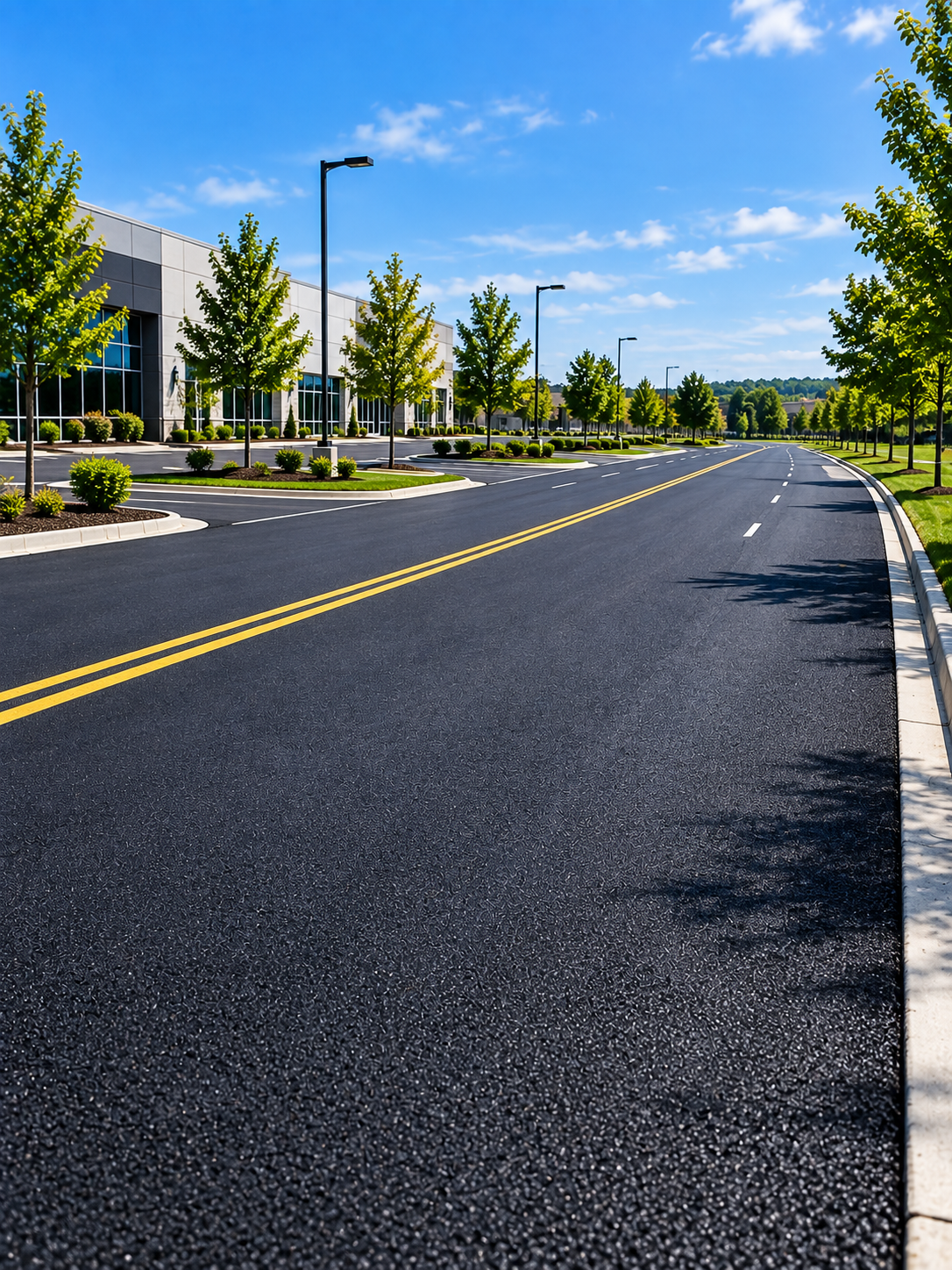
Driveway Paving for McKinney Homes
McKinney is a fast-growing Collin County community with established neighborhoods, new residential construction, retail centers, offices, schools, service businesses, and industrial or flex properties.
That mix creates very different pavement demands: a private driveway may see a few vehicle movements each day, while a commercial entrance, delivery lane, or parking lot can experience repeated turning, braking, and heavier loads. North Texas weather also matters. Long periods of heat can raise pavement temperatures, while thunderstorms can expose drainage weaknesses and allow water to reach cracks or poorly supported base material. Good asphalt work therefore starts below the visible surface, with attention to drainage, base support, lift thickness, compaction, edges, transitions, and the intended traffic.
Driveways in newer subdivisions may have different constraints than acreage properties or older homes. Garage elevations, sidewalks, curb cuts, drainage swales, utilities, landscaping, gates, and HOA or municipal requirements can all shape the project.
New Asphalt Driveways
A new driveway starts with layout and grades. The contractor must establish the footprint, remove unsuitable material, prepare the subgrade, construct a stable base where required, and create drainage before paving. Curves and turnaround areas need enough width for the intended vehicles.
The driveway should not be thought of as a black layer placed directly on native soil. The foundation distributes loads and gives paving equipment a stable platform. Weak or wet areas discovered during excavation may
require additional treatment
Driveway Replacement
An old driveway may be removed when it has widespread cracking, settlement, base failure, severe deformation, or elevations that cannot accept another overlay. Removal creates an opportunity to inspect the underlying base, correct soft spots, adjust grades, and rebuild weak edges.
Not every old driveway needs complete reconstruction. Some may be suitable for localized repairs and resurfacing. A site evaluation should determine whether the existing pavement is an asset that can be reused or a liability that should be removed
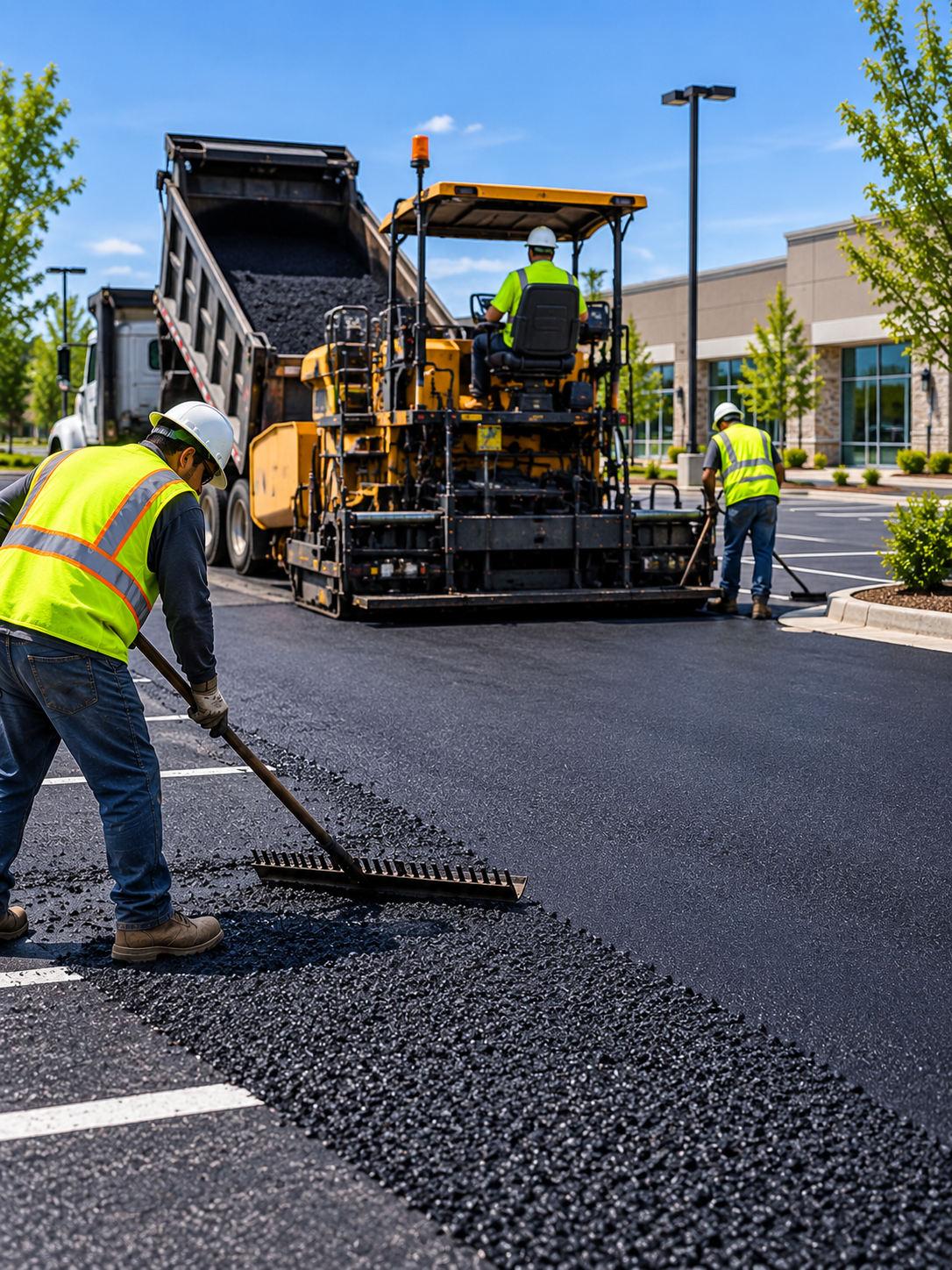
Driveway Extensions and Widening
Widening can add parking capacity or improve maneuvering, but the new section needs the same attention to foundation as the original driveway. The added area should be excavated and based rather than paved over topsoil or uncompacted landscape fill.
The joint between old and new pavement should be planned, and drainage should be rechecked after the footprint changes. Wider pavement can redirect runoff, so the final surface should not send water toward a garage, foundation, or neighboring property.
Base, Grade, and Edge Support
Three details cause many driveway problems: inadequate base, poor drainage, and unsupported edges. The aggregate base should be shaped and compacted to provide uniform support. Grades should shed water. Edges should have adequate base width and, where appropriate, shoulder support so vehicle tires do not break down the pavement edge.
Drivers can also protect edges by avoiding repeated parking with tires half on and half off the asphalt, especially while new pavement is still relatively tender.
Asphalt Mix and Compaction
Hot-mix asphalt combines aggregate and asphalt binder in a plant-produced mixture. The selected mix should be appropriate for the application and locally available materials. Once delivered, it must be placed and compacted before it cools below the effective compaction range.
TxDOT identifies temperature, aggregate characteristics, binder, lift thickness, rollers, haul conditions, and foundation support among factors that influence compaction. For homeowners, the takeaway is simple: density is created during construction and cannot be added later after the mat has cooled
Transitions at Garages, Streets, and Concrete
A driveway usually meets several fixed elevations. The asphalt should transition smoothly to the garage apron or slab without creating a trip edge or directing water into the building. At the street, the connection must work with the existing curb cut, gutter, shoulder, or public pavement.
Where asphalt meets concrete, the two materials can move differently. Clean construction and thoughtful grades are more important than trying to hide every joint.
A Typical Driveway Paving Process
A typical project includes site review, layout, removal or excavation if needed, subgrade and base preparation, grading, compaction, asphalt placement, rolling, edge finishing, and cleanup. Access for dump trucks and paving equipment is considered before work begins.
After paving, the driveway needs time to cool and stabilize before normal use. Owners should follow project-specific instructions, avoid sharp stationary tire turns when the pavement is hot, and be cautious with concentrated loads such as trailer jacks or kickstands.
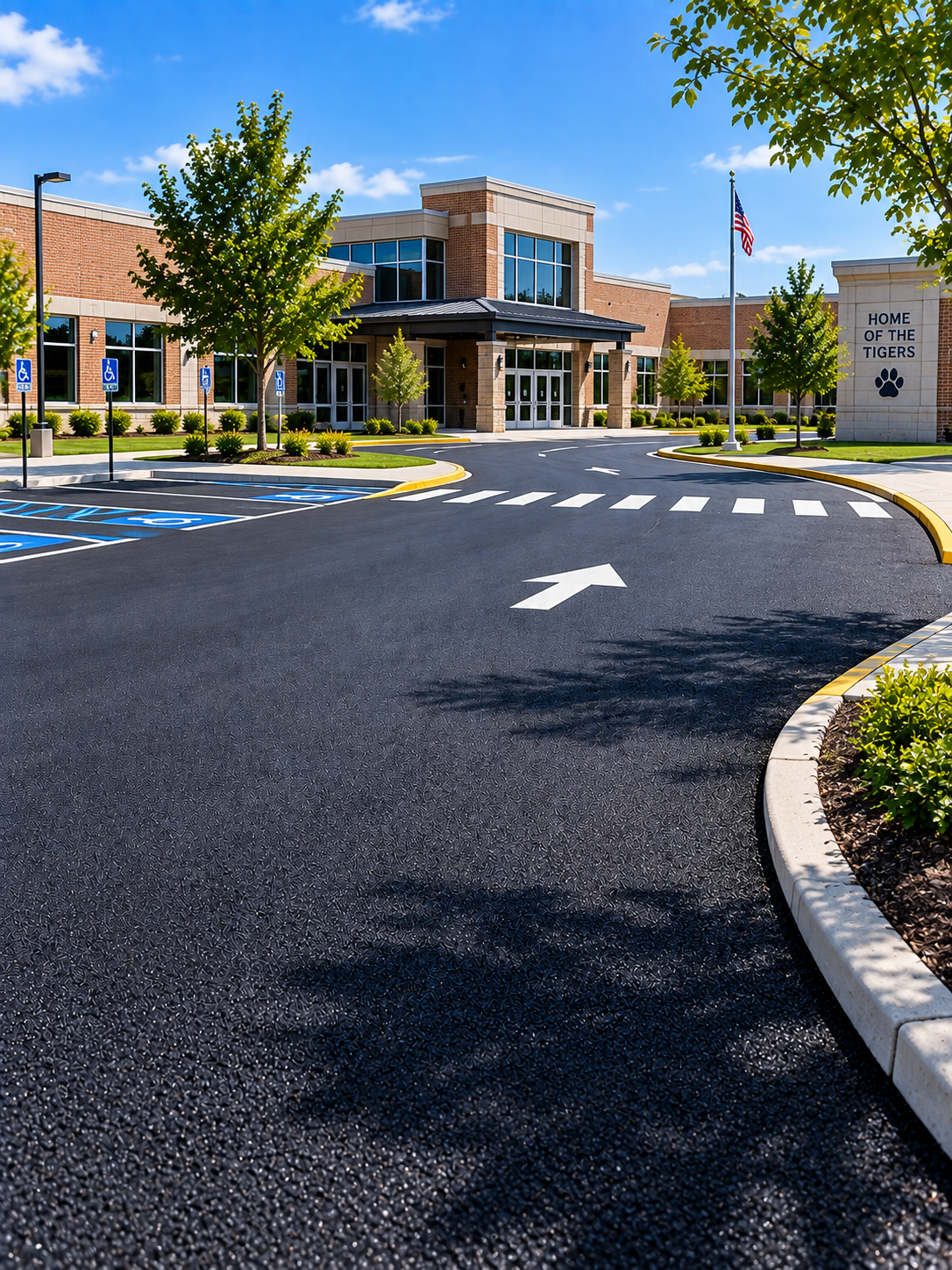
Driveway Maintenance After Paving
Maintenance starts with drainage. Keep leaves, soil, mulch, and debris from blocking water paths. Watch for cracks and address developing problems before water and traffic enlarge them. Avoid fuel or solvent spills when possible.
Sealcoating may become useful later as the surface ages, but it is not an immediate requirement for properly constructed new asphalt. Industry guidance generally treats sealing as a later preservation step, not something that must be applied to fresh pavement.
Service Area
Driveway paving is focused on McKinney, with potential availability in Allen, Fairview, Melissa, Princeton,Prosper, Frisco, and nearby Collin County communities depending on the project.
Why Choose McKinney Asphalt Paving
McKinney Asphalt Paving helps homeowners approach driveway paving as a complete site project. That means discussing the existing surface, vehicle use, grades, base support, drainage, access, and future maintenance instead of focusing only on the finished black surface.
For a new driveway, replacement, widening project, or evaluation of aging asphalt, contact McKinney Asphalt Paving to request a McKinney-area estimate and discuss the construction approach that fits the property.
Choosing a Driveway Paving Contractor in McKinney
Ask each contractor to explain removal, excavation, base, asphalt thickness, compaction, drainage, transitions, and edge treatment. If one proposal is substantially cheaper, determine whether the construction section is actually the same.
Also ask what is not included. Utility adjustments, concrete work, irrigation repairs, landscaping restoration, permits, or traffic control may be separate depending on the site. Clear scope prevents surprises.
Designing for Parking and Turning
Driveway dimensions should reflect more than the width of one vehicle. Families may need side-by-side parking, room to open doors, space for guests, or a turnaround that reduces backing into a busy street. Acreage properties may need delivery and service vehicles to maneuver without repeatedly driving off the pavement edge.
Where the driveway curves, the paved width and base support should account for off-tracking by longer vehicles. Tire paths near an unsupported inside or outside edge can damage a driveway that otherwise has adequate asphalt.
Hot-Weather Use and Concentrated Loads
Asphalt is a flexible pavement and can become more susceptible to indentation or scuffing during very hot weather, particularly when it is new. Sharp power-steering turns while a vehicle is stationary can mark the
surface. Trailer tongue jacks, motorcycle kickstands, or narrow equipment supports can concentrate substantial load on a small area.
Using pads under concentrated supports and avoiding unnecessary stationary steering can help protect the surface. These are practical ownership habits, not substitutes for proper construction.
Preparing Your Property for Driveway Work
Before the scheduled paving date, homeowners can make the site easier to work on by moving vehicles, trailers, portable basketball goals, planters, and other obstacles. Sprinkler systems should be turned off when watering could interfere with grading or paving. Pets should be secured away from construction traffic.
Discuss access to the home in advance. If the driveway is the only route to a garage or rear parking area, plan where vehicles will be kept while work is underway and while the new asphalt is unavailable. Deliveries, home-service appointments, and trash pickup may need temporary adjustments. These small logistics can make the construction day significantly smoother.
Driveway Paving Cost Factors
The size of the driveway matters, but it is only one cost factor. Removal of old pavement, excavation depth, amount of aggregate base, haul-off, asphalt quantity, access for equipment, handwork, drainage correction, and transitions all influence price. Small projects can have higher unit costs because mobilization and trucking are spread over fewer square feet.
Site shape also matters. A simple open rectangle is more efficient to pave than a narrow drive with multiple curves, gates, islands, and small parking pockets. A good estimate should explain the construction scope well enough that the homeowner understands what the price is buying.
Repair, Resurface, or Replace?
Homeowners often ask for "a new driveway" when the correct treatment may be repair or resurfacing. If the pavement is generally stable but has a few isolated failures, patching plus an overlay may be worth evaluating. If the surface is merely weathered, maintenance may be enough. If cracking is widespread and the base is moving, replacement may provide a better opportunity to correct the cause.
The decision should also consider elevations. A driveway can be structurally stable yet unsuitable for another overlay if added thickness would create problems at the garage, sidewalk, gate, or street. Treatment selection
is therefore both a pavement-condition and site-geometry decision.
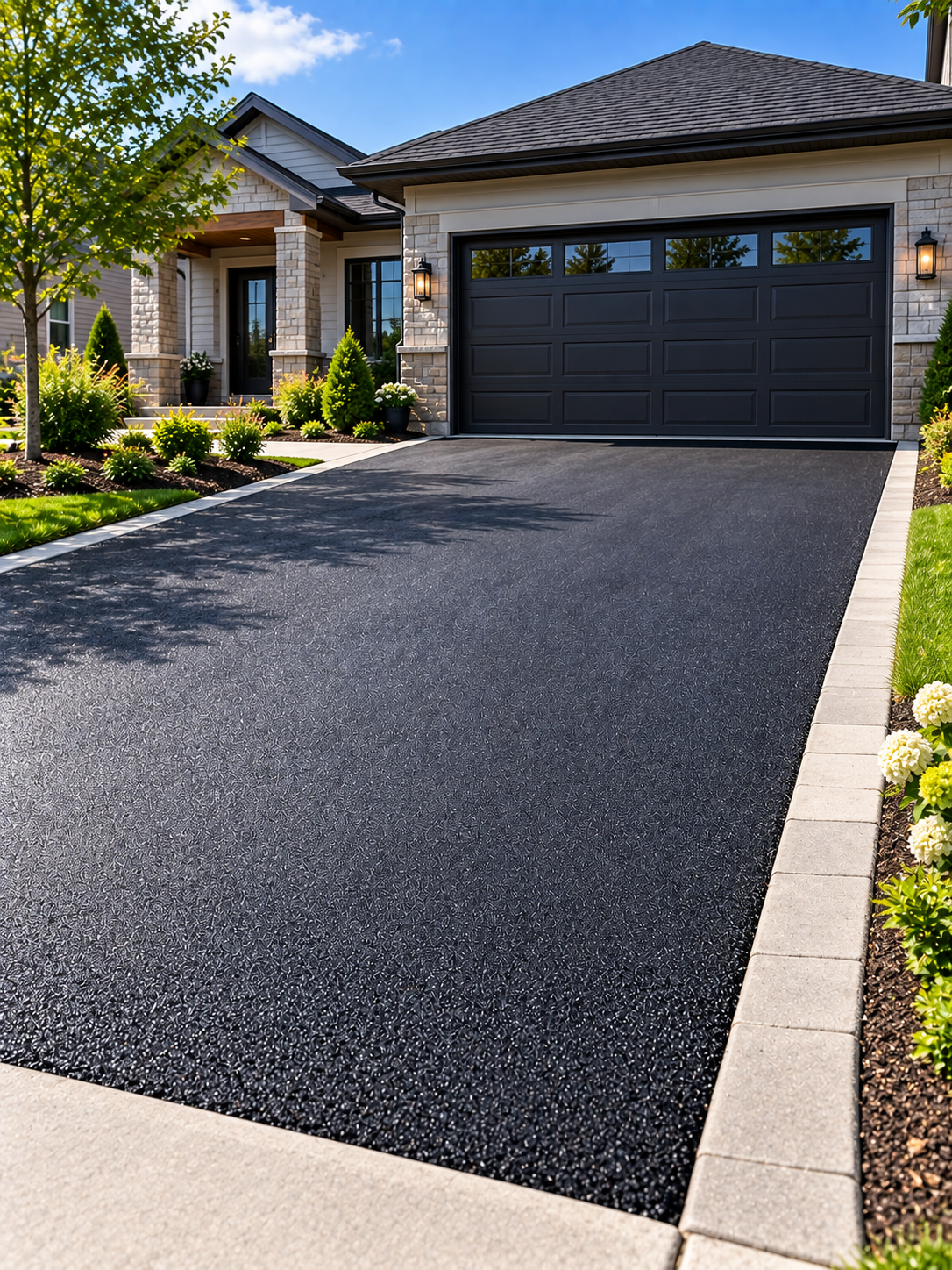
Frequently Asked Questions About Driveway Paving in McKinney
Is asphalt a good material for a residential driveway?
Yes. Asphalt is widely used for residential driveways because it creates a smooth, continuous surface and can
be repaired, maintained, and resurfaced over time when properly constructed.
How long does an asphalt driveway last?
There is no responsible single lifespan promise. Base quality, drainage, pavement thickness, compaction,
traffic, climate, maintenance, and soil movement all affect service life.
Can you pave over gravel?
An existing gravel drive may form part of the base if it has suitable material, thickness, drainage, and
compaction, but it should be evaluated and regraded or supplemented as needed before paving.
Can I pave over my old asphalt driveway?
Possibly. If the old pavement is stable and elevations allow it, resurfacing may be an option. Widespread
structural failure, severe settlement, or drainage problems may make replacement more appropriate.
Why does driveway drainage matter so much?
Water can weaken supporting materials, enter cracks, create ponding, and contribute to settlement. The
driveway should be graded to move water to an appropriate outlet.
Can an asphalt driveway be widened?
Yes. The new section should receive proper excavation, base, grading, and compaction so it does not settle
independently from the existing driveway.
When can I sealcoat a new driveway?
New asphalt generally should be allowed to age before sealcoating. Asphalt Institute guidance says a
well-designed low-traffic pavement may not need sealing for approximately two to five years, depending on
conditions.
What should I avoid on fresh asphalt?
Follow the contractor's access instructions. Early on, avoid heavy concentrated loads and sharp stationary
steering, particularly during hot weather when asphalt can be more susceptible to indentation.
Request a Driveway Paving
Estimate in McKinney, TX
If you are planning a driveway paving project or need help deciding which asphalt treatment fits your property,
contact McKinney Asphalt Paving to discuss the site and request an estimate. A condition-based
recommendation can help you compare maintenance, repair, resurfacing, or paving options with a clearer
understanding of what the project should accomplish.