
Commercial Paving in McKinney, TX
Expert Asphalt Paving Contractor for Residential Driveways, Parking Lots, Roads & Commercial Properties
A Practical Pavement Solution for McKinney Properties
Commercial asphalt paving has to do more than look finished on opening day. It must support the traffic pattern, vehicle loads, drainage, accessibility needs, tenant operations, deliveries, and maintenance plan of the property. Retail centers, offices, medical properties, industrial facilities, churches, schools, multifamily communities, and private developments can all require different pavement structures.
McKinney Asphalt Paving serves as a resource for commercial property owners and managers considering new asphalt, replacement, expansions, private drives, or other paved areas in McKinney. A strong commercial scope starts with how the site functions, then works backward to grading, base support, asphalt structure, transitions, phasing, and final markings.
Commercial Paving in McKinney, TX
Commercial Paving and McKinney's Development
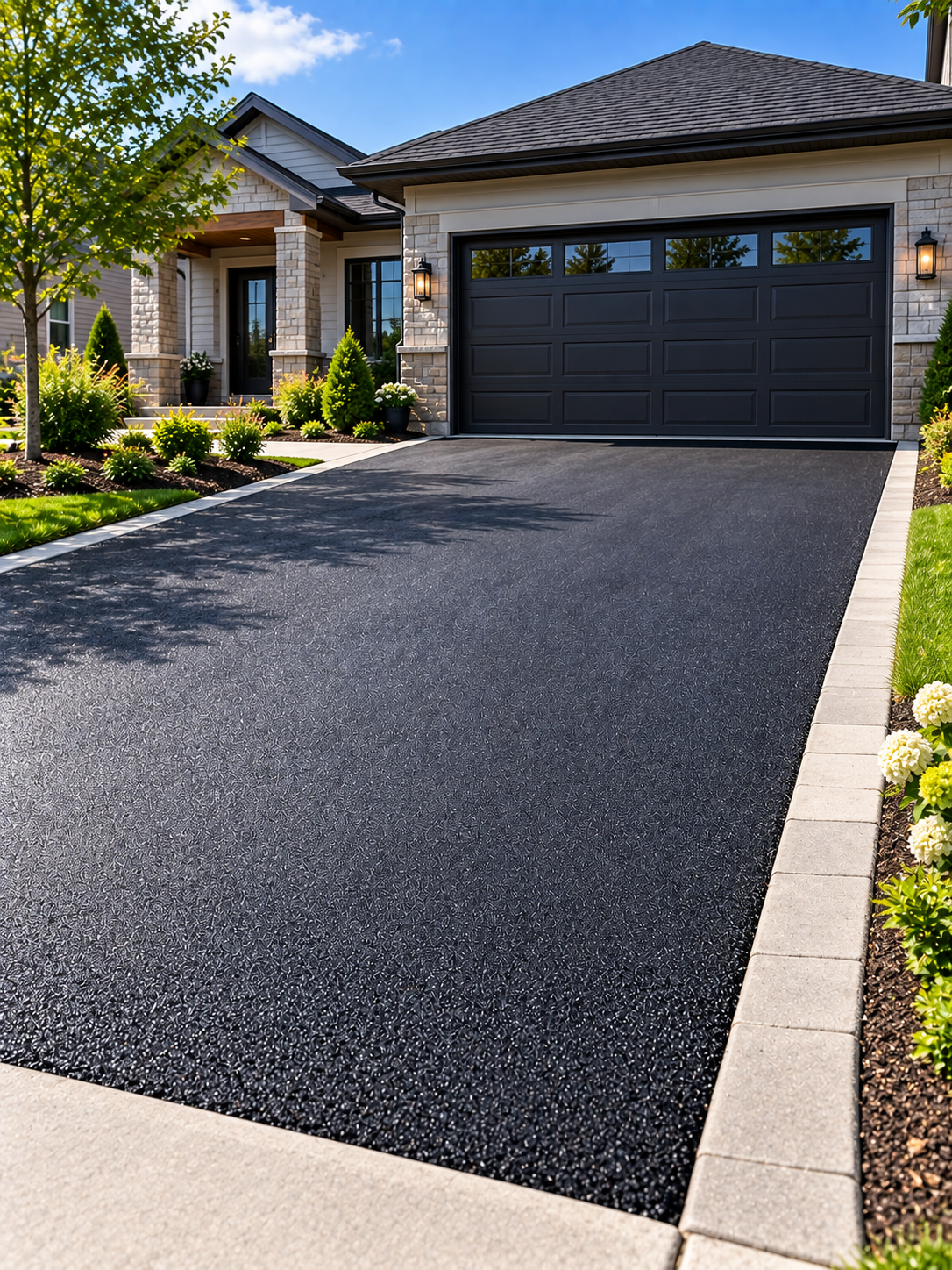
McKinney is a fast-growing Collin County community with established neighborhoods, new residential construction, retail centers, offices, schools, service businesses, and industrial or flex properties.
That mix creates very different pavement demands: a private driveway may see a few vehicle movements each day, while a commercial entrance, delivery lane, or parking lot can experience repeated turning, braking, and heavier loads. North Texas weather also matters. Long periods of heat can raise pavement temperatures, while thunderstorms can expose drainage weaknesses and allow water to reach cracks or poorly supported base material. Good asphalt work therefore starts below the visible surface, with attention to drainage, base
support, lift thickness, compaction, edges, transitions, and the intended traffic. McKinney's continuing residential and non-residential development means pavement may be part of new construction, tenant improvements, redevelopment, expansions, or maintenance of mature properties. Commercial projects often require coordination with other trades, site access plans, and operational schedules.
Commercial Applications
ommon applications include parking fields, access drives, private streets, fire-lane pavement, employee parking, service drives, loading approaches, dumpster access, storage yards intended for asphalt, apartment and HOA roads, school or church parking areas, and pavement around office or light-industrial buildings.
The load spectrum matters. Repeated delivery trucks, garbage trucks, buses, emergency vehicles, and tight turning movements can place substantially greater stress on pavement than passenger cars. Heavy-use zones may deserve different base or pavement design than lightly trafficked stalls.
Commercial Applications
Asphalt can provide a smooth, continuous driving surface with efficient construction sequencing. For many sites it offers a practical balance of initial construction, future maintenance, repairability, and resurfacing options. It can be patched after utility work, milled to adjust elevations, restriped as layouts change, and overlaid later when the underlying pavement remains suitable.
A well-planned asphalt project can also improve the customer experience by addressing roughness, potholes, confusing circulation, and deteriorated entrances. The visual result matters, but the operational result matters
more.
Traffic, Loading, and Pavement Structure
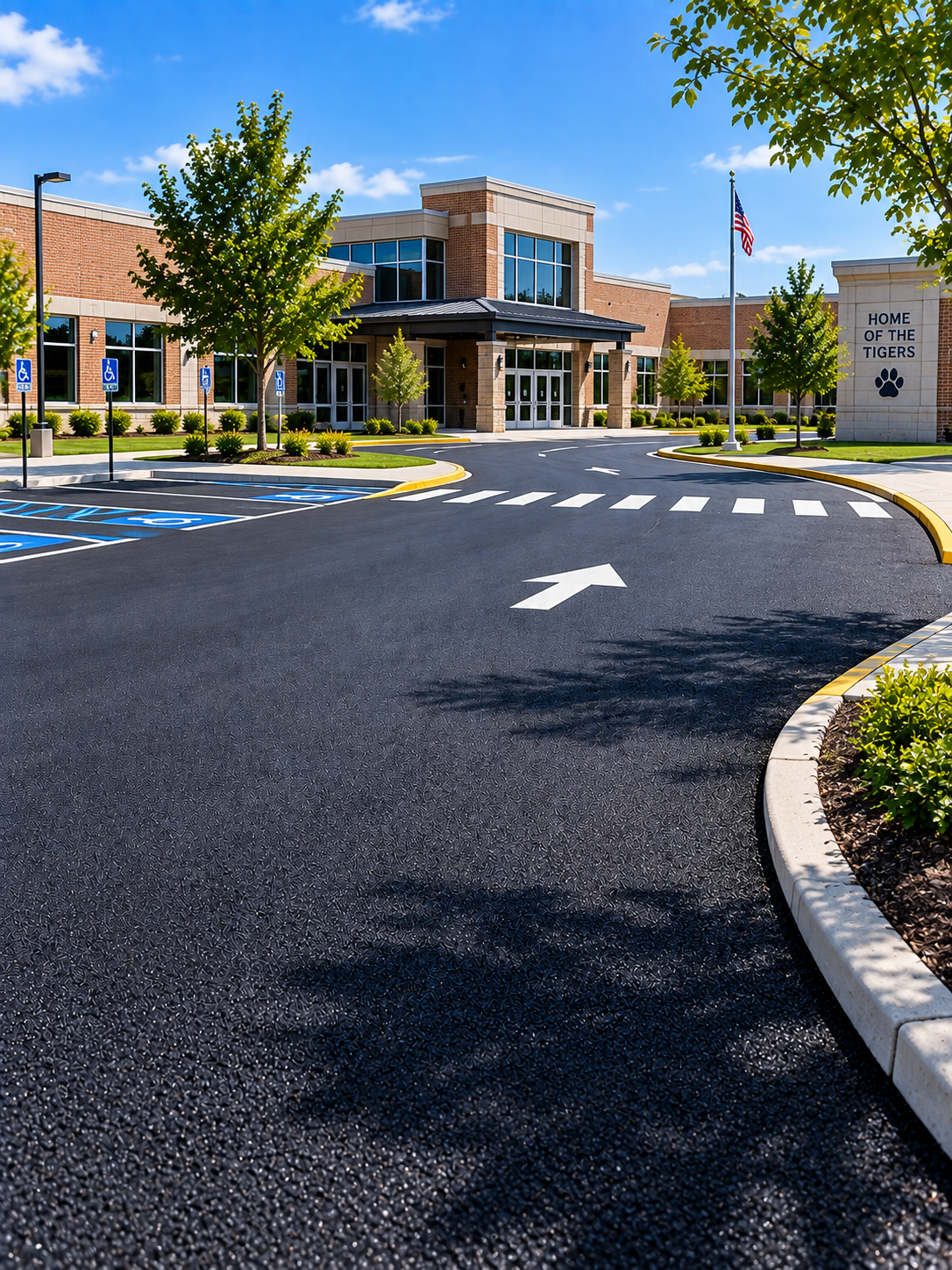
Commercial pavement should be designed around expected traffic rather than using a residential driveway section everywhere. Entrances, truck routes, loading zones, dumpster pads or approaches, and bus areas can receive concentrated loading and turning forces. Pavement thickness and base requirements should reflect those conditions.
Subgrade support is equally important. If underlying soil is unstable or wet, adding asphalt alone will not solve the problem. Corrective excavation, stabilization, aggregate base, geosynthetic products, or other measures may be considered depending on engineering and site conditions.
Drainage and Elevation Control
Water should leave the pavement efficiently without creating unsafe flow paths or ponding. Commercial sites may include curb-and-gutter, inlets, trench drains, concrete aprons, sidewalks, ramps, loading docks, and building entrances. Paving elevations must coordinate with these fixed features.
Resurfacing and replacement projects require particular care because adding or removing thickness can change drainage. Milling may be used around curbs, gutters, entrances, or structures to maintain elevations before a new asphalt surface is placed.
Phasing and Business Continuity
Many commercial properties cannot simply close. A paving plan may need phases that preserve an entrance, maintain customer parking, protect fire access, or schedule work around deliveries and peak business hours. Phasing can add mobilization and joint considerations, but it may be essential to keeping the property functional.
Clear communication with tenants, employees, vendors, and customers is part of successful execution. Barricades, cones, signs, and a reopening plan help prevent vehicles from entering fresh work.
A Typical Commercial Paving Process
The process begins with site evaluation, traffic requirements, measurements, and identification of failed areas or elevation constraints. The scope may include demolition or milling, excavation, subgrade correction, aggregate base, proofing or compaction, drainage adjustments, asphalt placement, and final markings.
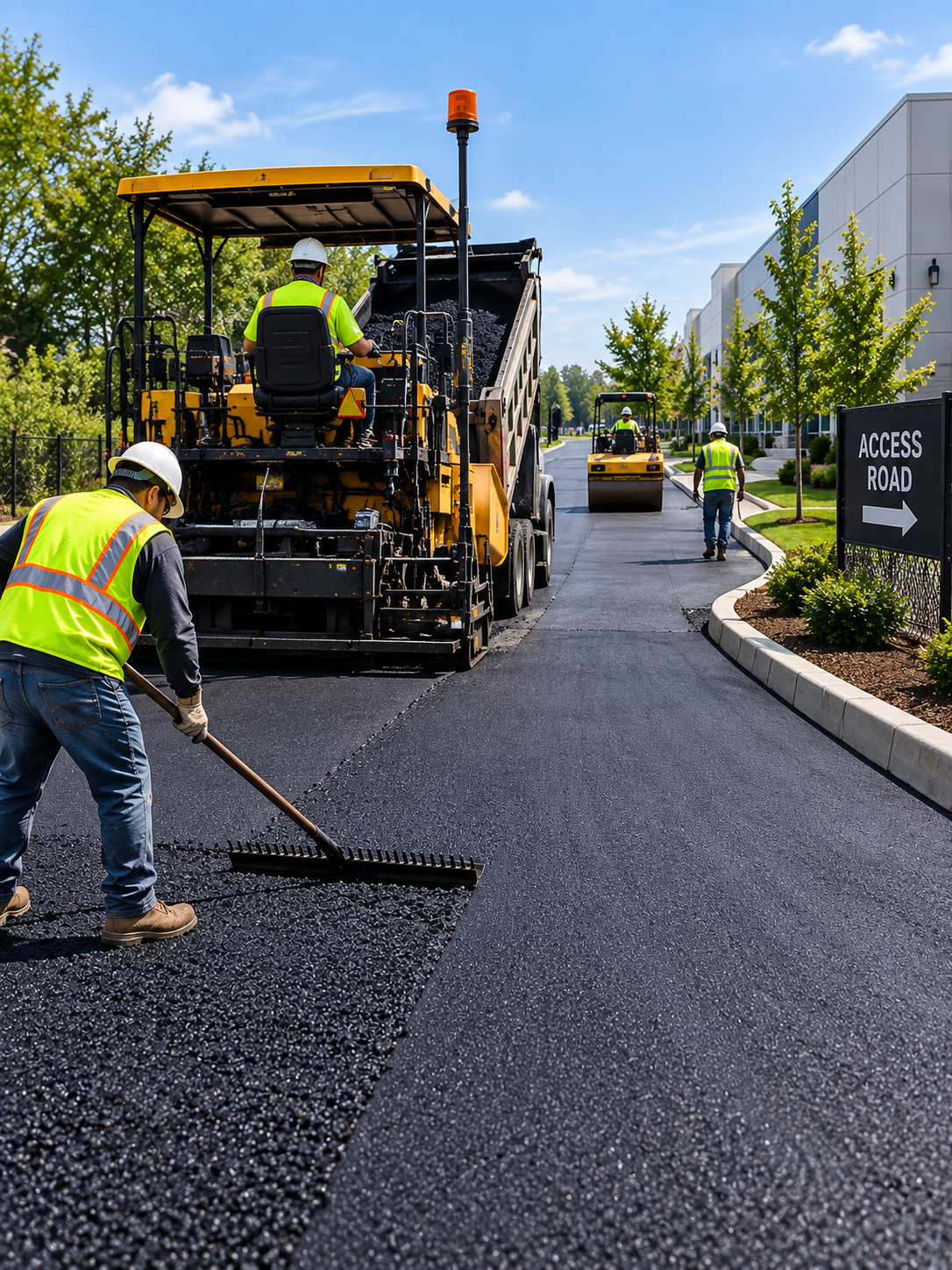
Hot-mix asphalt is placed in appropriate lifts and compacted while temperature permits. TxDOT notes that temperature, lift thickness, roller type, timing, speed, and number of passes all affect compaction. Commercial quality therefore depends on both the pavement design and disciplined field execution.
Parking Layout, Striping, and Accessibility
After asphalt has cooled or cured sufficiently for the next operation, commercial pavement often needs striping and markings. Layout should follow the approved site plan and applicable accessibility, fire-lane, and local requirements. Accessible parking is more than blue paint; space dimensions, access aisles, routes, slopes, signage, and connections to the building may all matter.
Owners should provide current plans or requirements when available rather than assuming an old striping pattern is still correct.
Choosing a Commercial Paving Contractor in McKinney
Request a scope detailed enough to compare pavement sections, demolition, base work, milling, asphalt lifts, traffic control, striping, and exclusions. Clarify who coordinates utility structures, concrete repairs, drainage structures, permits, testing, and third-party requirements when they apply.
Also ask how the contractor will sequence the work around operations. The best technical paving plan can still create problems if trucks, customers, or tenants cannot access the property when needed.
Service Area
Commercial paving is focused on McKinney, with potential service to surrounding Collin County and North Texas communities including Allen, Fairview, Melissa, Princeton, Prosper, and Frisco depending on project
requirements.
Why Choose McKinney Asphalt Paving
McKinney Asphalt Paving is positioned to discuss commercial asphalt work as a complete pavement project rather than a simple surface purchase. That includes new paving, replacement, resurfacing, parking-lot work, and maintenance options for existing asphalt.
For a McKinney business property, request a site-specific estimate that reflects traffic, access, drainage, existing conditions, and the desired construction schedule. The resulting scope can then be evaluated on what it actually includes, not just on a lump-sum price.
Coordination With Other Site Work
Commercial paving frequently happens near concrete, landscaping, utilities, lighting, drainage, and building work. Sequencing matters. Paving too early can expose the finished surface to construction traffic, tracked mud, crane outriggers, dumpsters, or utility cuts. Paving too late can delay striping, inspections, tenant access, or opening.
Owners and general contractors should identify which party is responsible for final grades, utility adjustments, curb repairs, concrete interfaces, pavement markings, and protection of completed work. Clear responsibility reduces last-minute conflicts.
Budgeting by Pavement Condition, Not Appearance Alone
Two lots that look equally gray can need very different work. One may have a sound base and need surface rehabilitation; another may have widespread structural cracking caused by poor support. A capital plan should therefore divide pavement into treatment zones rather than assuming every square foot receives the same
work. That approach can combine full-depth repairs in failed areas, milling and overlay in stable areas, and preventive maintenance in sections that are still in good condition. It directs stronger treatment to the places that need it most.
Preconstruction Planning for Commercial Sites
Before mobilization, commercial owners should identify site contacts, work hours, tenant restrictions, delivery schedules, security requirements, and any areas that cannot be blocked. If the project is part of a larger construction job, paving dates should be coordinated with concrete, landscaping, utility, lighting, and building
contractors.
The contractor should also know about underground structures and recent utility work. Trenches that were not compacted adequately can settle after paving. New storm structures may need final adjustment. Temporary construction entrances may contain contaminated base material that should not simply be paved over. These details are easier to address before the paving crew arrives.
Evaluating Commercial Paving Proposals
Commercial bids should be compared on measurable scope. Look for pavement area, demolition depth, disposal, base repair allowances, aggregate thickness, asphalt lift descriptions, milling limits, tack coat, structure adjustments, striping, traffic control, and restoration. If testing or engineering is required, identify who provides it.
Unit prices for additional base repair can be useful when hidden conditions are possible, but the method for measuring and approving extra work should be clear. Owners should also understand how weather delays, phased mobilizations, and changes in site access could affect the schedule. A well-defined proposal reduces the chance that important work is treated as an unexpected extra after construction starts.
Maintenance Planning for New Commercial Asphalt
A new commercial pavement should be inspected periodically rather than ignored until potholes appear. Property managers can watch for blocked drains, edge settlement, utility-cut movement, early cracking, oil contamination, and damage from heavy service vehicles. Small problems are easier to document and address before they spread.
Maintenance should be condition based. Crack treatment may be appropriate as cracks develop. Sealcoating may become useful after the asphalt has aged and the surface begins to weather. High-load zones may need localized repairs sooner than ordinary parking areas. Over the longer term, resurfacing can be considered if the pavement remains structurally stable. A simple inspection record helps owners budget based on observed condition instead of emergencies.

Frequently Asked Questions About Commercial Paving in McKinney
What types of properties use commercial asphalt paving?
Retail, office, medical, industrial, multifamily, religious, educational, hospitality, HOA, and mixed-use properties
commonly use asphalt for parking and private circulation.
How is commercial paving different from a home driveway?
Commercial sites often have heavier traffic, truck loads, more complex drainage, accessibility requirements,
traffic-control needs, and phased operations. Pavement sections should reflect those demands.
Can a business remain open during paving?
Sometimes. Phased construction may preserve limited access, but the site layout, number of entrances, curing
or cooling needs, and safety requirements determine what is practical.
Should damaged commercial asphalt be overlaid or replaced?
That depends on the cause and extent of distress. A stable pavement with surface deterioration may be a
resurfacing candidate; widespread base failure or severe structural distress may require deeper repair or
reconstruction.
Why is compaction important?
Adequate compaction reduces excessive air voids and helps the asphalt mat perform as intended.
Temperature and roller timing are critical because the mix becomes harder to compact as it cools.
Can truck lanes be built differently from parking stalls?
Yes. Areas exposed to heavier or repeated loads may warrant different pavement or base design. The project
should account for actual traffic patterns.
Does commercial paving include striping?
Striping can be included as part of a project scope, but it should be specifically identified. Layout and regulatory
requirements should be confirmed before markings are installed.
What information should I provide for an estimate?
Property plans if available, known drainage or utility issues, expected vehicle types, operating constraints,
desired schedule, and any known requirements from an owner, manager, municipality, or association are
useful.
Request a Commercial Paving Estimate in McKinney, TX
If you are planning a commercial paving project or need help deciding which asphalt treatment fits your
property, contact McKinney Asphalt Paving to discuss the site and request an estimate. A condition-based
recommendation can help you compare maintenance, repair, resurfacing, or paving options with a clearer
understanding of what the project should accomplish.