Asphalt Resurfacing in McKinney, TX
Expert Asphalt Paving Contractor for Residential Driveways, Parking Lots, Roads & Commercial Properties
A Practical Pavement Solution for McKinney Properties
Asphalt resurfacing places a new asphalt layer over an existing pavement after the old surface has been evaluated and prepared. It can restore ride quality, appearance, surface texture, and serviceability without removing every inch of the existing pavement. The key is candid evaluation: an overlay performs best when the pavement beneath it is stable enough to support the new surface.
For McKinney property owners, resurfacing can be an attractive middle ground between routine maintenance and full reconstruction. It is not appropriate for every cracked pavement, however. McKinney Asphalt Paving can help distinguish surface aging that may be rehabilitated with an overlay from deeper failures that need patching, base repair, milling, or replacement.
Asphalt Resurfacing in McKinney, TX

When Resurfacing Is the Right Tool
McKinney is a fast-growing Collin County community with established neighborhoods, new residential construction, retail centers, offices, schools, service businesses, and industrial or flex properties.
That mix creates very different pavement demands: a private driveway may see a few vehicle movements each day, while a commercial entrance, delivery lane, or parking lot can experience repeated turning, braking, and heavier loads. North Texas weather also matters. Long periods of heat can raise pavement temperatures, while thunderstorms can expose drainage weaknesses and allow water to reach cracks or poorly supported base material. Good asphalt work therefore starts below the visible surface, with attention to drainage, base support, lift thickness, compaction, edges, transitions, and the intended traffic.
Resurfacing is generally considered when pavement has widespread surface wear, oxidation, minor-to-moderate cracking, or roughness but still retains adequate structural support. The evaluation should look for alligator cracking, rutting, depressions, movement, drainage problems, and failed patches that could reflect through the new layer.
Overlay Versus Sealcoating Versus Replacement
Sealcoating is a thin preservation treatment; it does not add meaningful structural asphalt thickness. Resurfacing adds a new hot-mix asphalt layer and can correct more substantial surface deterioration. Reconstruction removes and rebuilds pavement where the existing structure is no longer a reliable foundation.
Choosing among these options is a condition decision, not merely a budget decision. Spending less on an inappropriate treatment can be more expensive if the new surface quickly reflects unresolved failures.
The Importance of Pre-Overlay Repairs
Federal Highway Administration guidance emphasizes examining existing pavement and identifying the causes of deterioration before an asphalt overlay. Localized potholes, fatigue-cracked areas, ruts, sags, and other
defects may require repair or leveling first. Cracks may need treatment, and the existing surface must be cleaned.
A tack coat is commonly used to promote bonding between the prepared old surface and the new asphalt layer. Bonding matters because the overlay and underlying pavement should act together rather than slide or delaminate.
Milling and Profile Adjustments
Milling removes a controlled depth of existing asphalt. It may be used across an entire area or selectively around curbs, gutters, transitions, manholes, drains, concrete aprons, or building approaches. The purpose can be to remove deteriorated material, restore room for a new lift, improve profile, or prevent the finished pavement from becoming too high.
Not every overlay requires full-depth milling. The appropriate approach depends on existing elevations, distress, pavement thickness, drainage, and desired finished grades.
Leveling Courses and Low Areas
An existing surface may have depressions or irregular contours that should not simply be copied by the new overlay. A leveling or wedge course can be used to improve profile before the final surface course. Severe settlement, however, may indicate a base or subgrade problem that should be investigated rather than hidden.
Drainage is a major test. If water ponds before resurfacing, adding a uniform layer often raises the whole
surface without fixing the relative low spot. Corrective grading or variable-depth work may be needed.
Residential Asphalt Resurfacing
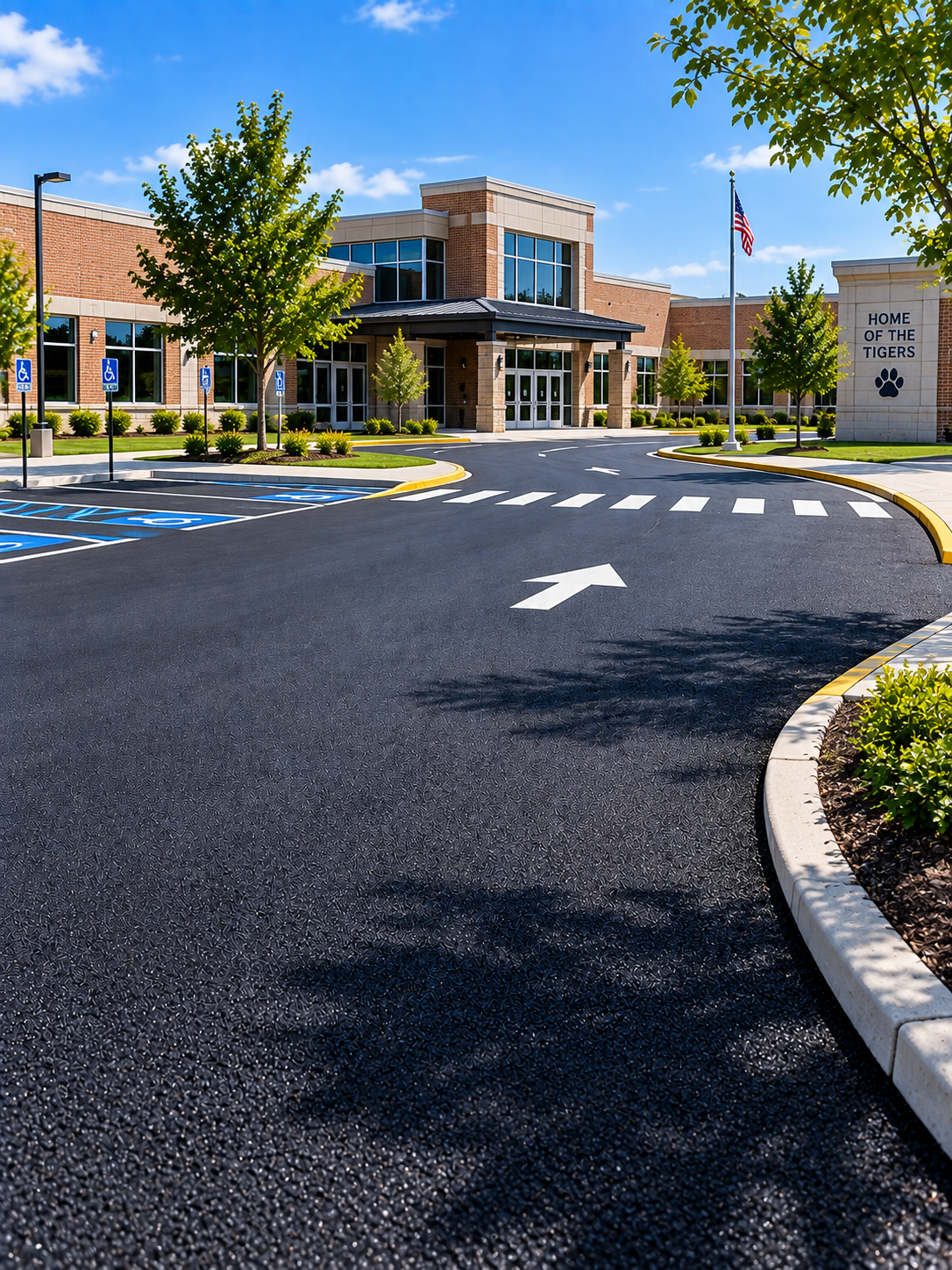
A driveway overlay can refresh an aging residential surface when the base and old pavement are stable. Particular attention is needed at the garage, sidewalk, street, drainage swales, gates, and edges. Added thickness can create lips or change water flow, which is why milling or tapering may be necessary.
Driveways with widespread alligator cracking, major edge failure, or repeated settlement may be poor overlay candidates unless those failures are repaired first.
Commercial Resurfacing
Parking lots and private commercial drives are frequent resurfacing candidates because an overlay can renew a large paved area with less demolition than full reconstruction. Commercial work may be phased, milled around structures, patched in heavy-load zones, and restriped after paving.
Traffic patterns should influence the repair plan. Dumpster approaches, loading lanes, entrances, bus routes, and tight turns often fail differently from ordinary parking stalls and may require deeper work before the overlay.
A Typical Resurfacing Process
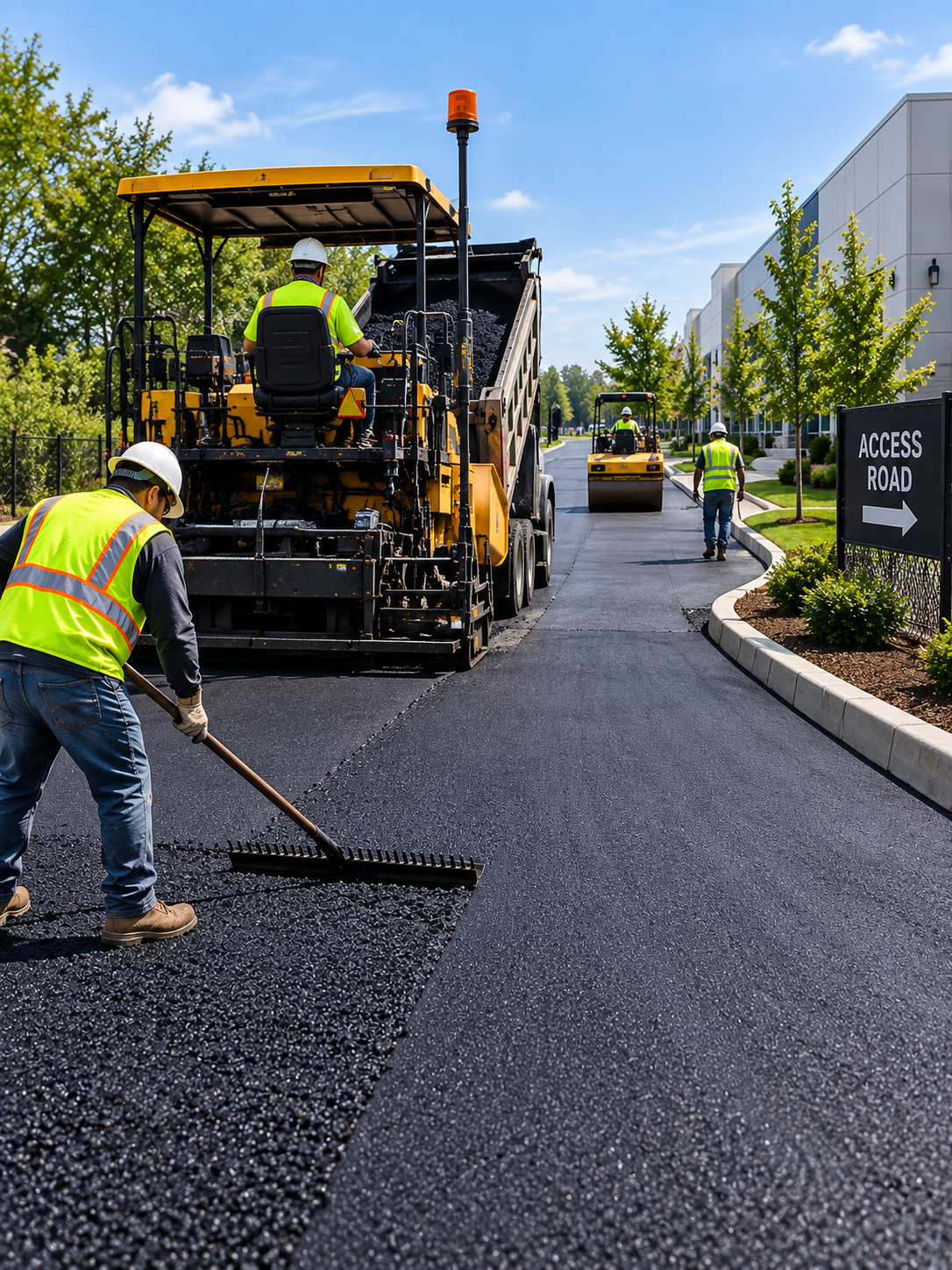
A typical sequence is condition assessment, repair design, cleaning, localized patching, crack or joint treatment where appropriate, milling or leveling as needed, tack coat, hot-mix asphalt placement, and compaction.
Commercial projects may then receive striping and markings. The overlay must be compacted while the mix is hot enough to respond to rolling. Lift thickness, mix characteristics, air and surface temperature, haul time, and roller operations all influence the available compaction window.
Choosing an Asphalt Resurfacing Contractor in McKinney
Ask how the contractor determined that resurfacing is appropriate. Review the planned overlay thickness, milling limits, patch areas, leveling, tack coat, drainage considerations, and transitions. On commercial sites, confirm traffic phasing and restriping.
A detailed scope is especially important because two resurfacing bids can look similar while including very different amounts of preparation. The performance of the overlay is closely tied to what happens before the new asphalt is placed.
Service Area
Resurfacing inquiries are centered on McKinney and may extend to Allen, Fairview, Melissa, Princeton, Prosper, Frisco, and other nearby communities depending on project size and scheduling.
Why Choose McKinney Asphalt Paving
McKinney Asphalt Paving can help property owners evaluate resurfacing alongside repair, maintenance, and replacement options. The objective is to use an overlay where the existing pavement can reasonably support it and to identify localized failures that should be corrected first.
Contact McKinney Asphalt Paving for an evaluation of an aging McKinney driveway, parking lot, or private paved area. A site review can clarify whether the next step is sealcoating, patching, milling and resurfacing, or more extensive reconstruction.
Reflective Cracking and Realistic Expectations
Existing cracks can eventually reflect through an asphalt overlay because movement or weakness remains below the new surface. Pre-overlay repairs and crack-control strategies can reduce risk, but an overlay does
not erase the history of the pavement underneath it.
This is why an honest resurfacing proposal should identify visible distress and explain what is being done about it. Owners should be skeptical of promises that a thin overlay will permanently eliminate severe structural
cracking without deeper repairs.
Why Overlay Thickness Is Only Part of the Decision
Owners often focus on the thickness of the new asphalt, but an overlay is a system. Existing support, crack pattern, repairs, tack coat, mix selection, compaction, drainage, and transitions all affect performance. A thicker
overlay placed over active base failure can still crack because the underlying movement remains.
Conversely, a properly prepared stable pavement may gain substantial functional improvement from a well-designed overlay withot full removal. The evaluation and preparation are what make resurfacing a
rehabilitation strategy rather than simply adding black material.
Edges, Curbs, and Fixed Elevations
Resurfacing raises pavement unless material is removed first. That can reduce curb reveal, bury gutter flow lines, create lips at sidewalks, interfere with doors or gates, and make drainage structures sit low. Milling is
often used strategically to preserve these relationships.
At project boundaries, the new overlay should transition smoothly to adjoining pavement or concrete. Tapered tie-ins and milled butt joints can help avoid abrupt bumps while maintaining enough asphalt thickness for a durable connection.
How Contractors Evaluate an Overlay Candidate
A resurfacing evaluation should look beyond surface color. The contractor may walk the pavement to map cracking, potholes, ruts, depressions, failed patches, and drainage paths. Areas that move under traffic or show interconnected fatigue cracking deserve special attention because they can indicate loss of support.
Elevation checks are also important. The contractor should consider curb reveal, drainage inlets, garage floors, sidewalks, loading docks, gates, and adjoining pavement. If the site cannot accept the proposed added thickness, milling or reconstruction may be needed. The objective is to understand both structural condition and geometry before choosing the overlay approach.
What to Expect After an Asphalt Overlay
A new overlay should provide a renewed wearing surface and improved appearance, but owners should maintain realistic expectations. Some underlying joints or cracks may eventually become visible. Slight variations can remain where the old pavement profile could not be completely corrected. Utility structures and concrete interfaces will still be visible transitions.
After paving, keep drainage structures clear and monitor areas that previously failed. If a repaired location begins to move again, that may provide useful evidence about deeper support or water problems. Resurfacing performs best as one step in an ongoing pavement-management approach rather than a one-time promise that the site will never need maintenance again.
Resurfacing as Part of a Pavement Management Plan
For a large property, resurfacing does not have to be an all-or-nothing event. Pavement can be divided into condition zones. One section may need full-depth repair, another may be ready for overlay, and a newer section may need only routine preservation. Treating each area according to condition can make capital
spending more purposeful.
Owners can also coordinate resurfacing with planned utility work, curb replacement, drainage improvements, or site reconfiguration. Cutting a new overlay shortly after it is installed wastes part of the investment. When possible, known underground and concrete work should be completed first so the final asphalt surface remains intact.
Frequently Asked Questions About Asphalt Resurfacing in McKinney
What is asphalt resurfacing?
Resurfacing generally means preparing an existing asphalt pavement and placing a new asphalt overlay over
it. Repairs, milling, leveling, and tack coat may be part of the work.
How do I know if my pavement can be resurfaced?
A contractor should evaluate structural cracking, settlement, rutting, potholes, drainage, base support,
elevations, and prior repairs. Pavement with a stable foundation is a better overlay candidate.
Will an overlay stop all cracks from coming back?
No. Existing cracks can reflect through a new surface over time. Appropriate repairs and treatments can
reduce the risk, but severe underlying movement may require deeper reconstruction.
What is milling?
Milling uses specialized equipment to remove a controlled depth of asphalt. It can remove damaged material or
create room for a new overlay while preserving curb, drainage, and transition elevations.
Is resurfacing cheaper than full replacement?
It can require less demolition and base reconstruction when the existing pavement is suitable, but cost
depends on preparation, milling, repairs, thickness, access, and project size.
Can a parking lot be resurfaced in phases?
Often yes, if circulation and access allow it. Phasing should be planned around entrances, tenants, deliveries,
emergency access, and striping.
Does resurfacing fix drainage problems?
It can correct some profile issues when leveling or grading is designed into the work, but simply adding a
uniform overlay will not automatically fix low spots or inadequate drainage.
What happens before the overlay is placed?
The surface is evaluated and cleaned; failed areas may be patched; milling or leveling may be performed; and
a bonding or tack coat is typically applied before new hot-mix asphalt is placed.
Request a Asphalt Resurfacing Estimate in McKinney, TX
If you are planning a asphalt resurfacing project or need help deciding which asphalt treatment fits your
property, contact McKinney Asphalt Paving to discuss the site and request an estimate. A condition-based
recommendation can help you compare maintenance, repair, resurfacing, or paving options with a clearer
understanding of what the project should accomplish