
Sealcoating in McKinney, TX
Expert Asphalt Paving Contractor for Residential Driveways, Parking Lots, Roads & Commercial Properties
Protect Asphalt Before Surface Aging Becomes Major Damage
Sealcoating is a preventive asphalt-maintenance treatment designed to refresh and protect a pavement surface that is still structurally serviceable. For property owners searching for McKinney Asphalt Paving, sealcoating is most useful when the pavement has begun to look dry, gray, or weathered but has not deteriorated to the point that widespread structural repair or resurfacing is required. A properly selected sealer forms a thin protective wearing layer over the asphalt surface, helps slow oxidation and surface raveling, and gives maintained pavement a darker, more uniform appearance.
Sealcoating is not a substitute for paving. It cannot rebuild a failed base, permanently close wide structural cracks, remove deep ruts, or correct drainage problems. That distinction matters because the best
maintenance decision depends on the pavement's condition. A sound driveway or parking lot with early surface aging may be a good sealcoating candidate. Pavement with extensive alligator cracking, soft areas, severe depressions, or repeated potholes usually needs repair or rehabilitation first.
Sealcoating in McKinney, TX
Why Sealcoating Makes Sense in McKinney
McKinney is a fast-growing Collin County community with established neighborhoods, new residential construction, retail centers, offices, schools, service businesses, and industrial or flex properties.
That mix creates very different pavement demands: a private driveway may see a few vehicle movements each day, while a commercial entrance, delivery lane, or parking lot can experience repeated turning, braking, and
heavier loads. North Texas weather also matters. Long periods of heat can raise pavement temperatures, while thunderstorms can expose drainage weaknesses and allow water to reach cracks or poorly supported base material. Good asphalt work therefore starts below the visible surface, with attention to drainage, base support, lift thickness, compaction, edges, transitions, and the intended traffic.
Heat and ultraviolet exposure contribute to oxidation of asphalt binder at the surface. As asphalt ages, it can become more brittle and lose fine aggregate. Water can then exploit open cracks and weak areas. Sealcoating is intended to be part of a maintenance cycle that addresses the surface before deterioration becomes more
expensive. Industry guidance also cautions against sealing brand-new asphalt immediately; new pavement generally needs time to age before a maintenance sealer is appropriate. The correct timing depends on
pavement condition, original construction, traffic, climate, and the specific product being considered.
What Professional Sealcoating
Can Address
A professional sealcoating project begins with evaluation rather than simply spreading black material over the pavement. The surface should be checked for structural cracking, potholes, oil contamination, loose aggregate, vegetation, failed patches, low areas, and drainage concerns. Dirt and debris must be removed because a coating can only bond well to a properly prepared surface.
Cracks that are suitable for crack treatment are normally addressed separately. Potholes or failed asphalt areas may require removal and patching. Oil spots may need cleaning or priming according to the sealer
manufacturer's requirements. Only after preparation should the sealcoat be applied in a controlled, uniform manner. The goal is a thin protective treatment, not a thick layer intended to hide defects
Benefits of Asphalt Sealcoating
The first benefit is preservation. Sealcoat can help reduce the rate at which an aging surface oxidizes and loses fine material. That can be valuable when the underlying pavement is still in reasonable condition and the owner wants to protect prior paving investment.
Appearance is another practical benefit. A maintained black surface can improve the presentation of a driveway, storefront, office property, multifamily community, or parking area. On commercial sites, fresh
pavement markings applied after curing can create a cleaner, easier-to-read traffic layout.
Sealcoating also supports a planned maintenance approach. Inspecting the pavement before coating often identifies cracks, isolated failures, and drainage concerns early. Addressing those issues while they are
localized can be more manageable than waiting until large portions of the pavement require replacement.
Residential Sealcoating
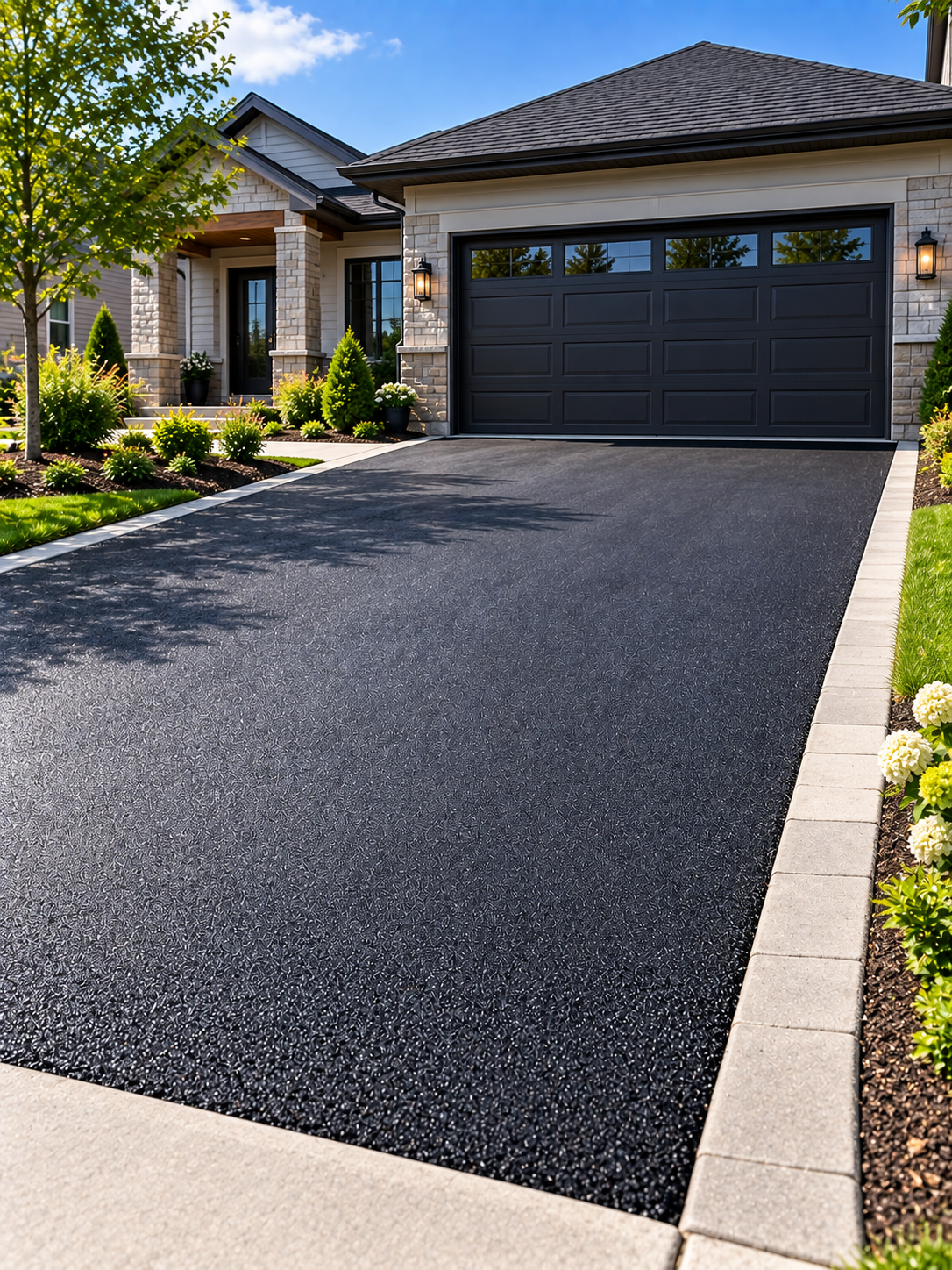
Residential driveways commonly benefit from sealcoating when the asphalt is intact but showing surface weathering. The work can improve curb appeal while helping protect the surface from ongoing exposure. Preparation is especially important around garage aprons, sidewalks, concrete curbs, landscaping, and street transitions because overspray or sloppy edging can detract from an otherwise good project.
Homeowners should plan for temporary loss of driveway access while the coating cures. Vehicles, trailers, trash containers, basketball goals, and other movable items should be coordinated before work begins. Sprinkler schedules and landscape watering may also need adjustment so the surface stays dry during
application and initial curing.
Commercial Sealcoating
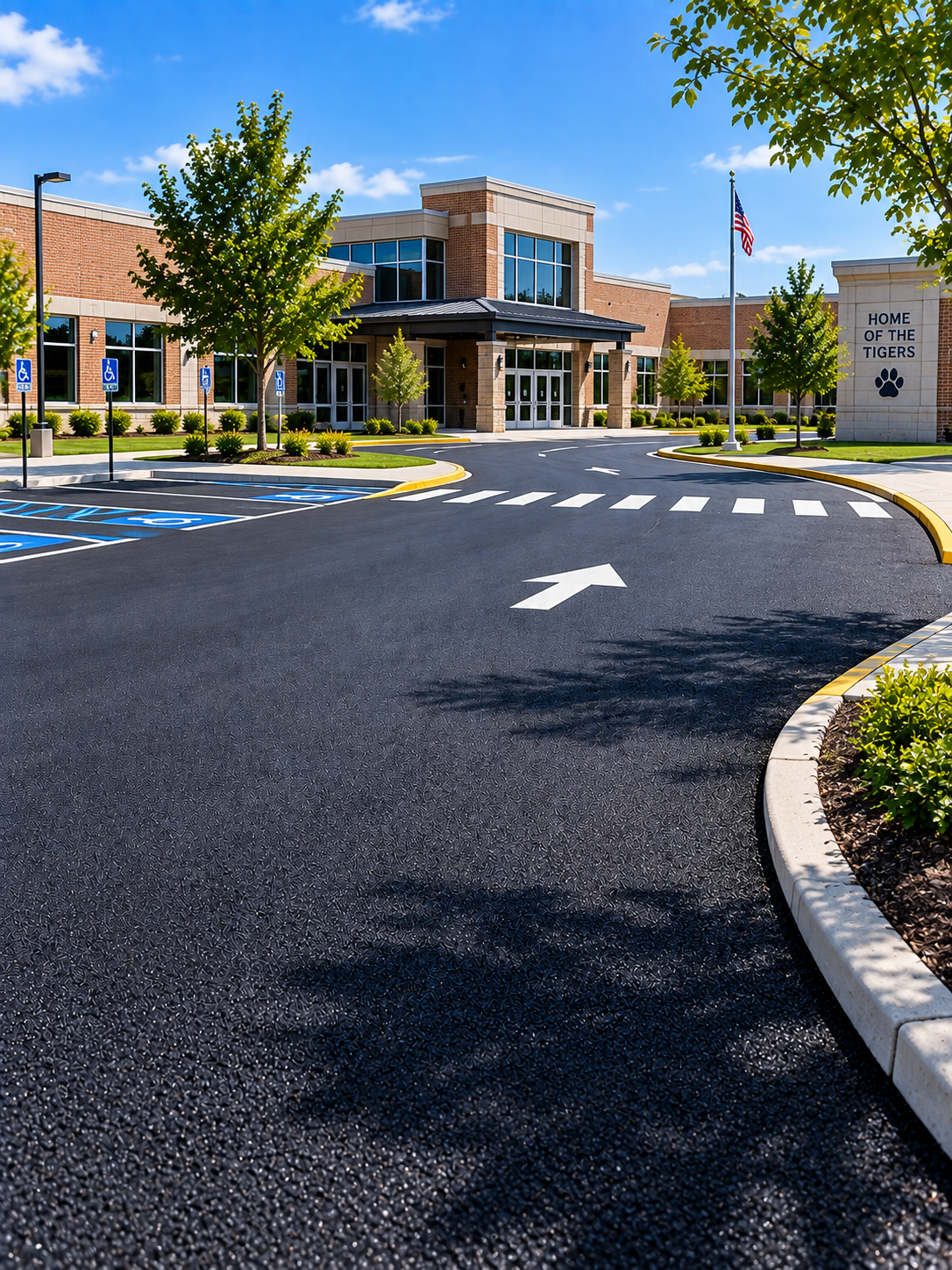
Commercial sealcoating requires more logistics than a typical residential driveway. A parking lot may need to remain accessible to customers, employees, deliveries, emergency vehicles, and neighboring tenants. Phased work can sometimes keep portions of the site open while other sections cure.
Commercial preparation may include crack treatment, localized patching, cleaning around dumpster areas,
attention to drive-through lanes, and protection of curbs or concrete islands. After the sealer has cured sufficiently, pavement markings can be restored. Striping layout, accessible spaces, fire lanes, directional arrows, loading areas, and other markings should be coordinated with the property owner's requirements and applicable rules.
Sealcoat Materials and Application Considerations
Sealcoating products vary. Asphalt-emulsion based sealers are widely used for asphalt pavement maintenance, and commercial formulations may include mineral fillers, additives, polymers, or sand according to the product design. Product selection should consider pavement condition, intended use, manufacturer instructions, weather, and traffic.
More material is not automatically better. Excessively heavy application can cure poorly, track, crack, or wear irregularly. Uniform coverage, correct dilution when permitted, proper mixing, and suitable application equipment are more important than creating the thickest possible black layer. Some products are sprayed, some are squeegee applied, and some projects use a combination depending on site conditions.
A Typical Professional Sealcoating Process
A typical project starts with a pavement assessment and a scope that separates surface maintenance from repairs. The area is cleared, cleaned, and edged. Vegetation and loose material are removed. Suitable cracks are treated, and failed areas are patched when included in the project. Oil-contaminated areas receive appropriate preparation.
The contractor then confirms weather conditions and surface dryness. Sealer is mixed and applied according to the product requirements, with careful work around concrete, buildings, gates, landscaping, and other surfaces. The area is barricaded or marked to prevent premature traffic. After adequate curing, commercial lots can be restriped if included. The final step is reopening the pavement only when conditions and the selected material allow it.
Why Surface Preparation and Timing Matter
Sealcoating depends heavily on adhesion and curing. Dust, mud, standing water, active leaks, or loose aggregate can interfere with bonding. Rain too soon after application can damage uncured material. Cool, humid, shaded, or damp conditions can slow curing, while very hot conditions can create different application challenges. Contractors should work within the selected product's temperature and weather limits.
Timing also matters in the life of the pavement. Sealing too early can be unnecessary, while waiting until structural distress is widespread may mean a coating is no longer the appropriate treatment. The most cost-effective moment is generally when the pavement is aging at the surface but remains fundamentally
sound.
Choosing a Sealcoating Contractor
in McKinney, TX
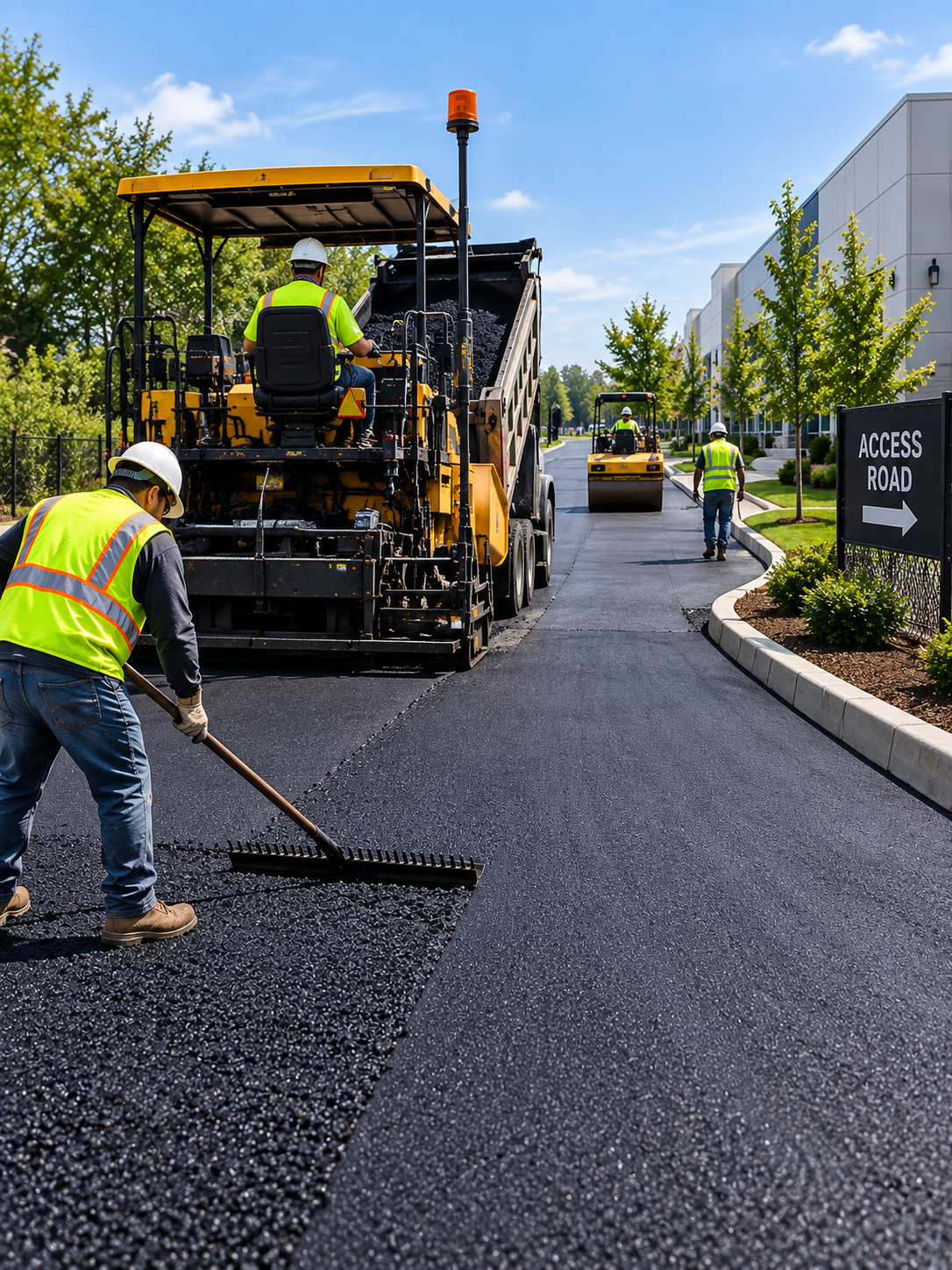
Ask a contractor to explain what preparation is included, what defects will and will not be repaired, what sealer system is proposed, how many applications or passes are planned, and how long the area should remain closed. For a commercial property, ask how traffic control and striping will be handled.
Be cautious of proposals that promise sealcoating will fix structural cracks, deep depressions, base failures, or major drainage problems. A useful estimate should distinguish maintenance from repair. It should also describe
site preparation and access requirements clearly enough that you can compare scopes rather than comparing price alone.
Service Area
The primary focus is McKinney, Texas. Depending on project requirements and scheduling, nearby Collin County communities such as Allen, Fairview, Melissa, Princeton, Prosper, and Frisco may also be relevant service areas. Confirm availability for your specific property when requesting an estimate.
Why Choose McKinney Asphalt Paving
McKinney Asphalt Paving focuses on asphalt-related solutions for property owners who need practical guidance on pavement condition, maintenance, and improvement. For sealcoating, that means evaluating whether preservation is appropriate instead of treating every dark coating as a cure-all. Customers can discuss driveway maintenance, parking-lot maintenance, crack concerns, patching needs, resurfacing possibilities, and future paving plans in the context of the overall pavement.
If your asphalt is structurally sound but beginning to show surface aging, request an evaluation and estimate. If the pavement has moved beyond routine maintenance, the conversation can shift to repair or resurfacing options rather than applying a cosmetic treatment that does not address the real problem.
What Sealcoating Cannot Fix
A useful sealcoating page should be as clear about limitations as benefits. Coating over severe alligator cracking will darken the cracks but will not restore the broken pavement structure. Coating over a deep
depression will not change the grade. Coating over loose, raveled material may simply create a temporary skin over an unstable surface. And coating over active oil contamination can lead to adhesion problems.
For that reason, a contractor should separate cosmetic expectations from pavement-preservation goals. If the owner wants a uniformly black appearance, surface defects may still remain visible. If the owner wants longer pavement life, the more important question is whether cracks, drainage, and failed areas are being addressed at the correct level.
Planning for Crack Repair and Striping
Crack treatment and sealcoating are related but separate operations. Crack material is selected and installed according to crack type, width, movement, and site conditions. Some cracks are symptoms of deeper structural failure and should not be treated as routine maintenance.
On commercial lots, striping is normally renewed after the sealcoat has cured enough for marking. This creates a good opportunity to verify the layout before simply tracing every old line. Property managers can review stall arrangement, arrows, loading zones, accessible markings, fire-lane requirements, and any operational changes that have occurred since the last maintenance cycle.
Frequently Asked Questions About Sealcoating in McKinney
How often should asphalt be sealcoated?
There is no universal schedule. Condition, traffic, sun exposure, drainage, original construction, and product
type all matter. Sealcoating should be based on observed surface aging rather than an automatic annual
treatment.
Should new asphalt be sealcoated right away?
Usually no. Asphalt Institute guidance notes that a well-designed, properly constructed low-traffic pavement
generally should not need sealing for roughly two to five years, depending on climate and original work. A
contractor should evaluate the actual surface before recommending treatment.
Will sealcoating fill cracks?
It can cover very fine surface voids, but meaningful cracks should be evaluated and treated separately. Wide,
moving, or structural cracks cannot be repaired simply by coating over them.
Can you sealcoat over potholes
That is not a proper repair. Failed areas should be patched or otherwise repaired before sealcoating if the
surrounding pavement is still a good preservation candidate.
How long does sealcoating take to dry?
Drying and curing depend on the product, temperature, humidity, sunlight, application rate, and site conditions.
Follow the contractor's reopening instructions rather than relying on a fixed number of hours.
Does sealcoating make asphalt slippery?
Properly formulated and applied pavement sealer is designed for pavement use. Aggregate or sand may be
incorporated in some systems for texture and wear. Site use and product specifications should guide selection.
Can a commercial parking lot be sealcoated without closing the entire property?
Often the work can be phased, but the feasibility depends on entrances, circulation, tenant needs, emergency
access, and curing time.
Is sealcoating the same as resurfacing?
No. Sealcoating is a thin maintenance treatment. Resurfacing places a new asphalt layer and can restore a
worn surface when the existing pavement is a suitable base for an overlay.
Request a Sealcoating Estimate
in McKinney, TX
If you are planning a sealcoating project or need help deciding which asphalt treatment fits your property,
contact McKinney Asphalt Paving to discuss the site and request an estimate. A condition-based
recommendation can help you compare maintenance, repair, resurfacing, or paving options with a clearer
understanding of what the project should accomplish.